Supplier Spotlight: Hirata Precision Industrial VN — Japanese Quality DNA in Vietnam
April 3, 2026 · 7 min read
Part of our Supplier Spotlight series — real factory visits, real photos, no stock images.
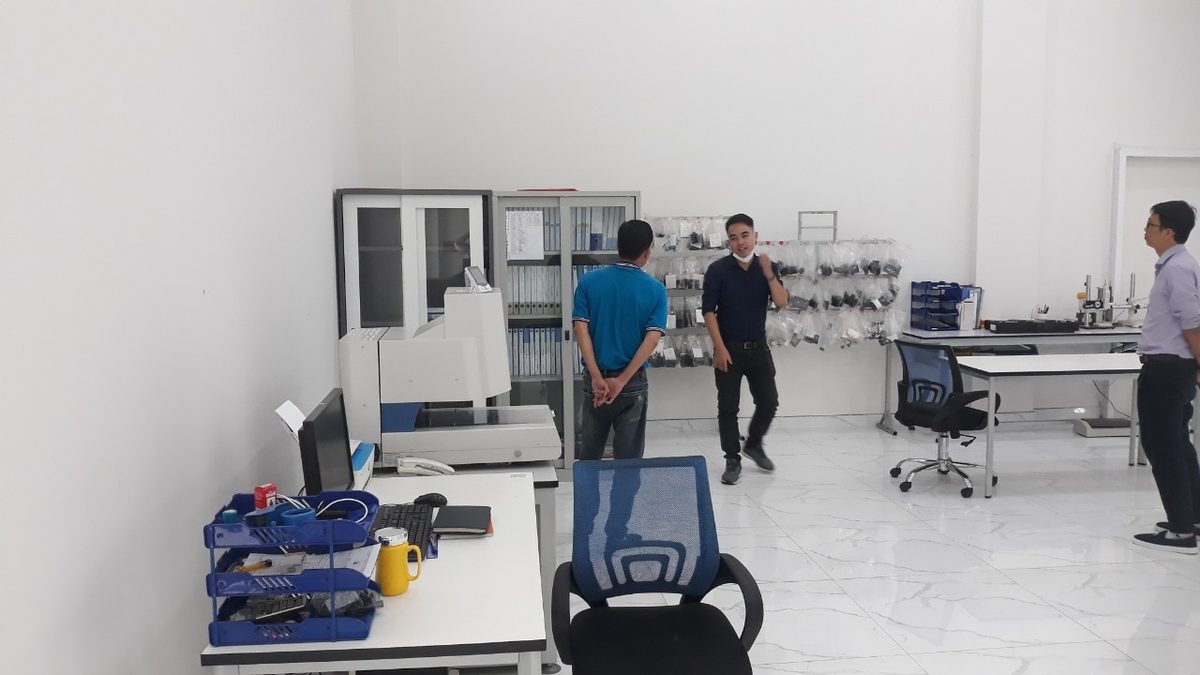
Vietnam's manufacturing ecosystem is not a single tier. At one end: low-cost commodity shops. At the other: factories built by or modeled after Japanese OEMs — with 5S embedded in the culture, documented inspection systems, and precision measurement tools that match what global industrial buyers require. Hirata is at that second tier.
This is our seventh Supplier Spotlight — a series where we document the actual factories inside DEWIN's 179+ audited Vietnam supplier network with real photos from real site visits. No stock images. No anonymous listings. This edition: Hirata Precision Industrial VN — a Japanese-branded precision machining facility operating in Vietnam under Japanese quality disciplines, fully audited under our 50-point Dolphin framework.
Previous spotlights: Bueno Technology (CNC), Altop Precision Die Casting, NAPEC (CNC + CMM), HDP Precision Mechanical Engineering, Minh Quang Multi-Process, and Eguchiseiko Die Cast.
Vietnam's Japanese Manufacturing Heritage
Japan has been among Vietnam's largest foreign direct investors since the 1990s. Over three decades, Japanese manufacturers — automotive suppliers, electronics producers, precision machining companies — have established factories in Vietnam and trained local workforces to their standards. The result is a tier of Vietnamese-registered factories that operate with Japanese production discipline.
The "Hirata" name is part of this heritage. Hirata Precision Industrial VN is a Vietnamese-registered entity that carries Japanese manufacturing DNA into its daily operations: 5S criteria displayed and enforced on the production floor, machine maintenance records posted on equipment, dedicated inspection zones separate from the production floor, and precision 2D Video Measuring Machine (VMM) inspection built into the quality process.
For global buyers sourcing from Vietnam, this Japanese-standard tier removes uncertainty. You're not gambling on quality. You're sourcing from a factory whose entire production system was designed to meet Japanese OEM requirements — a bar that typically exceeds what most global industrial customers specify.
Factory at a Glance
Country
Vietnam
Management Standard
Japanese precision manufacturing disciplines
Primary Process
Precision machining — CNC turning, milling, mechanical components
DEWIN Audit Status
✓ 50-Point Dolphin Audit Passed
Key QC Equipment
2D Video Measuring Machine (VMM) — non-contact optical dimensional inspection (×2 units)
Best Fit Parts
Precision shafts, housings, brackets, turned/milled components, parts requiring tight tolerances and FAI documentation
Factory Photo Walk-Through
1. Workshop Overview — Deliberate Production Layout
The workshop is laid out with production flow in mind. Raw material staging, machining cells, intermediate inspection, and finished goods storage follow a logical sequence — no doubling back, no cross-traffic between clean and dirty zones. This is 5S production planning in practice, not theory. DEWIN auditors note production layout as part of Pillar 3 (Workplace Organization) in the Dolphin audit.
2. 5S Criteria — Visual Management Posted and Enforced
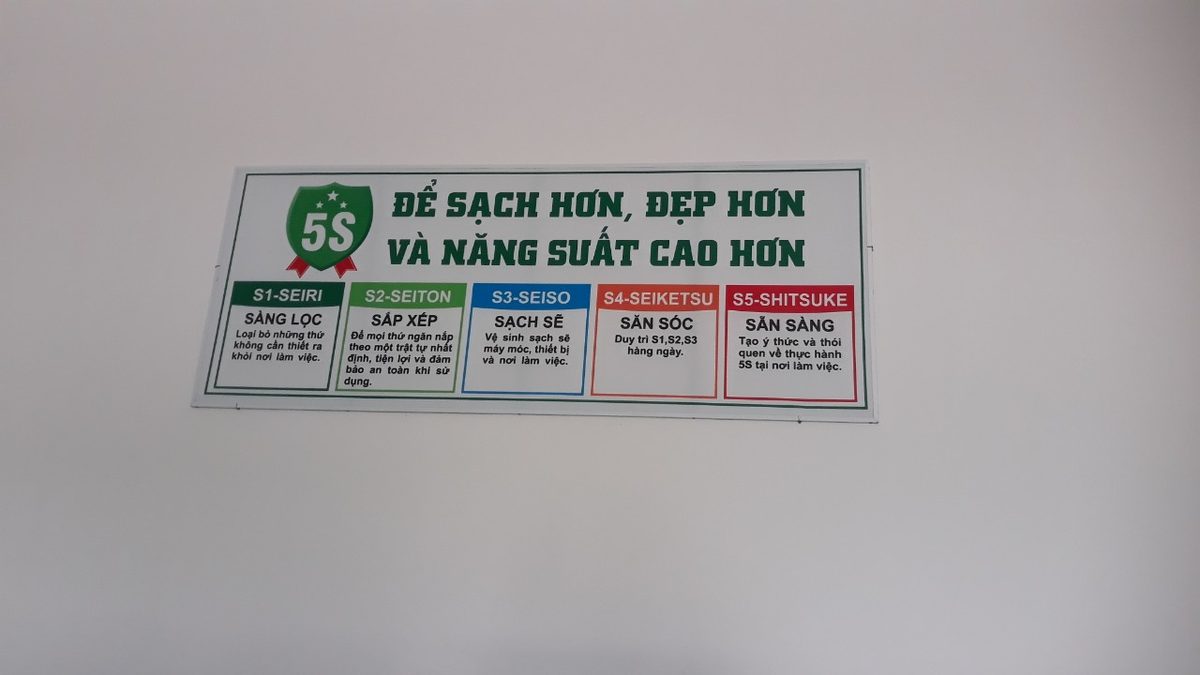
The 5S criteria board is displayed prominently on the factory floor — a visual management tool, not a compliance decoration. At Japanese-standard factories, 5S is not a QC department initiative; it's how every operator organizes their workspace, how every tool is stored, how every cleaning cycle is tracked. DEWIN verifies active 5S compliance during factory visits, not just the presence of a poster.
What this translates to for buyers: consistent part quality from batch to batch, lower contamination risk, and faster problem diagnosis when a non-conformance occurs.
3. 2D Video Measuring Machine — Optical Precision Inspection
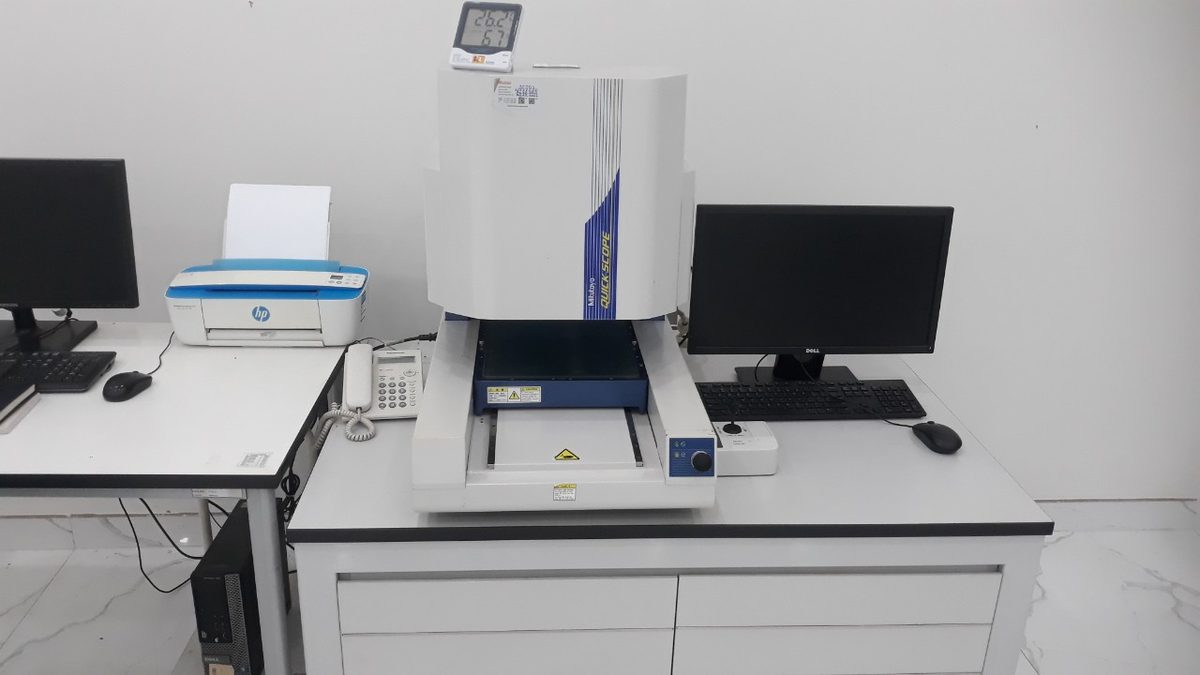
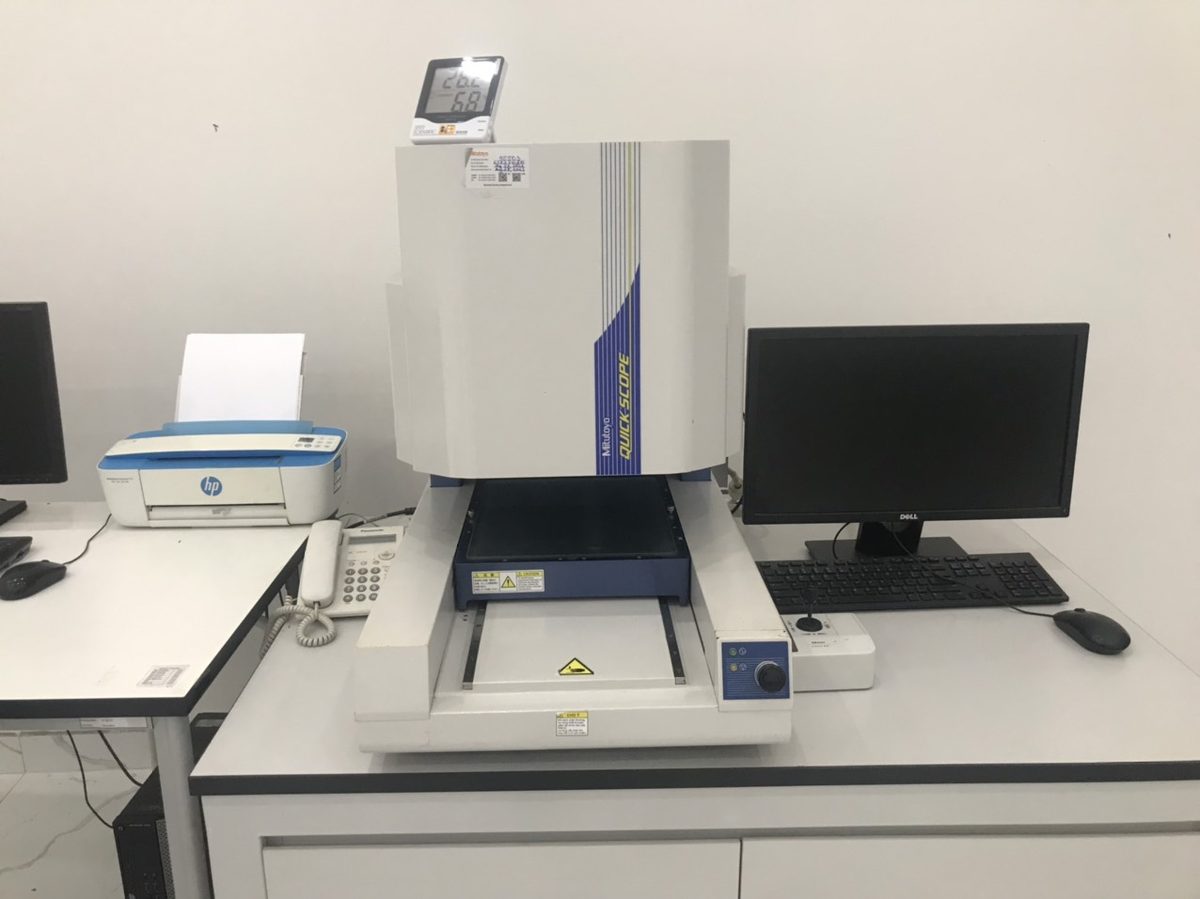
Hirata operates two 2D Video Measuring Machine (VMM) units — non-contact optical measurement systems that verify dimensional accuracy without physical probe contact. VMM is the standard inspection method in Japanese automotive and electronics supply chains for high-throughput FAI and batch inspection of turned and milled parts.
What is a 2D Video Measuring Machine (VMM)?
A VMM uses a high-resolution camera and calibrated optics to measure part dimensions without physical contact. The system captures images of the part and uses edge-detection algorithms to measure diameters, hole positions, profile contours, and flat-feature geometry to sub-micron repeatability. Ideal for: turned shafts, hole patterns, 2D profiles, stamped features, and any part where probe contact would distort the measurement.
Hirata's two VMM units allow parallel inspection — one for first-article verification, one for in-process batch checks — without bottlenecking production throughput.
For global buyers, the practical implication: Hirata can produce First Article Inspection (FAI) reports with objective dimensional data — not just operator calipers. This is the documentation standard required by automotive Tier 1/Tier 2 supply chains, defense primes, and precision equipment OEMs.
4. Dedicated Inspection Area — Segregated QC Zone
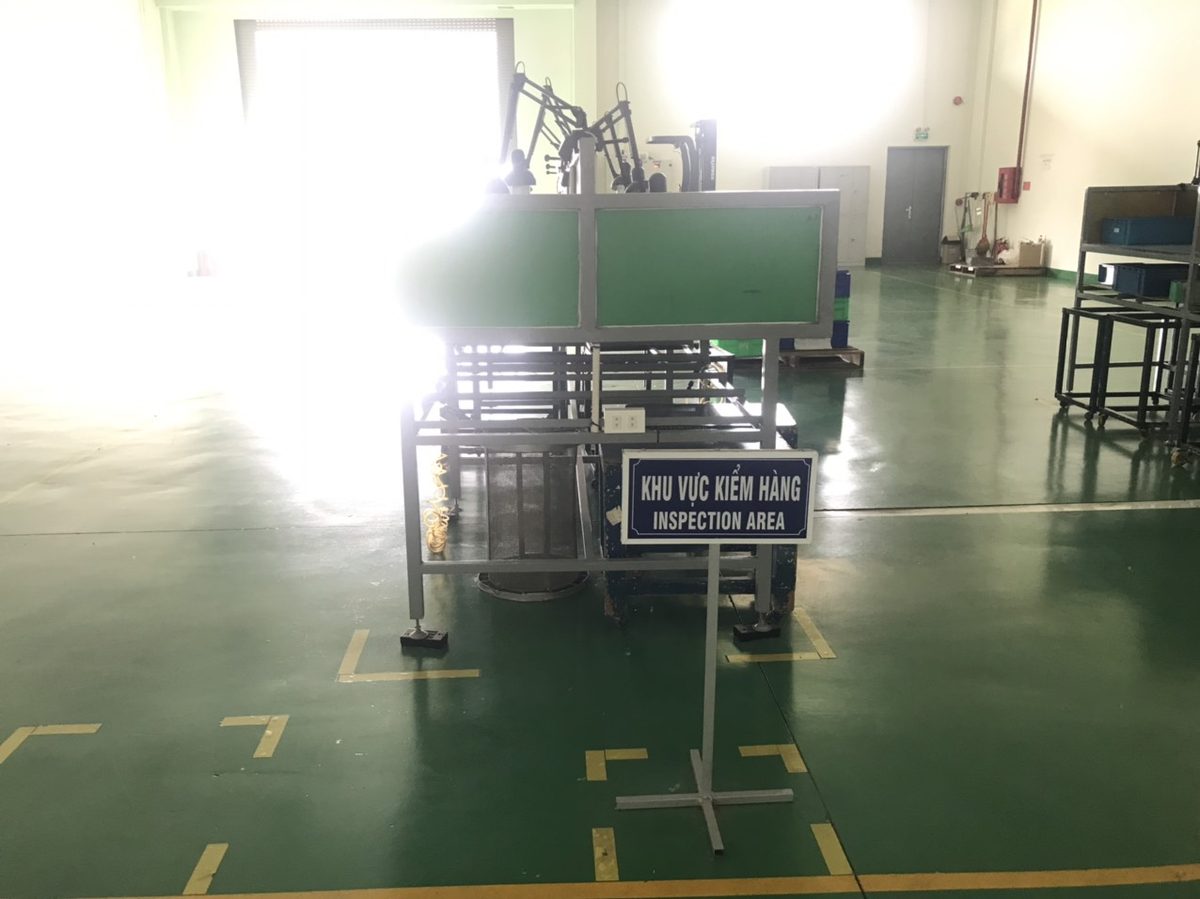
Hirata maintains a physically separated inspection area — a dedicated QC zone separated from the production floor. Finished parts come to the inspection station, not the other way around. This matters because temperature variation, vibration, and airborne debris on a production floor all affect measurement accuracy. A dedicated inspection zone controls those variables. DEWIN's Dolphin audit Pillar 1 (Quality Systems) specifically evaluates whether inspection is organizationally and physically independent from production.
5. Machine Inspection Records — Maintenance Documented on Equipment
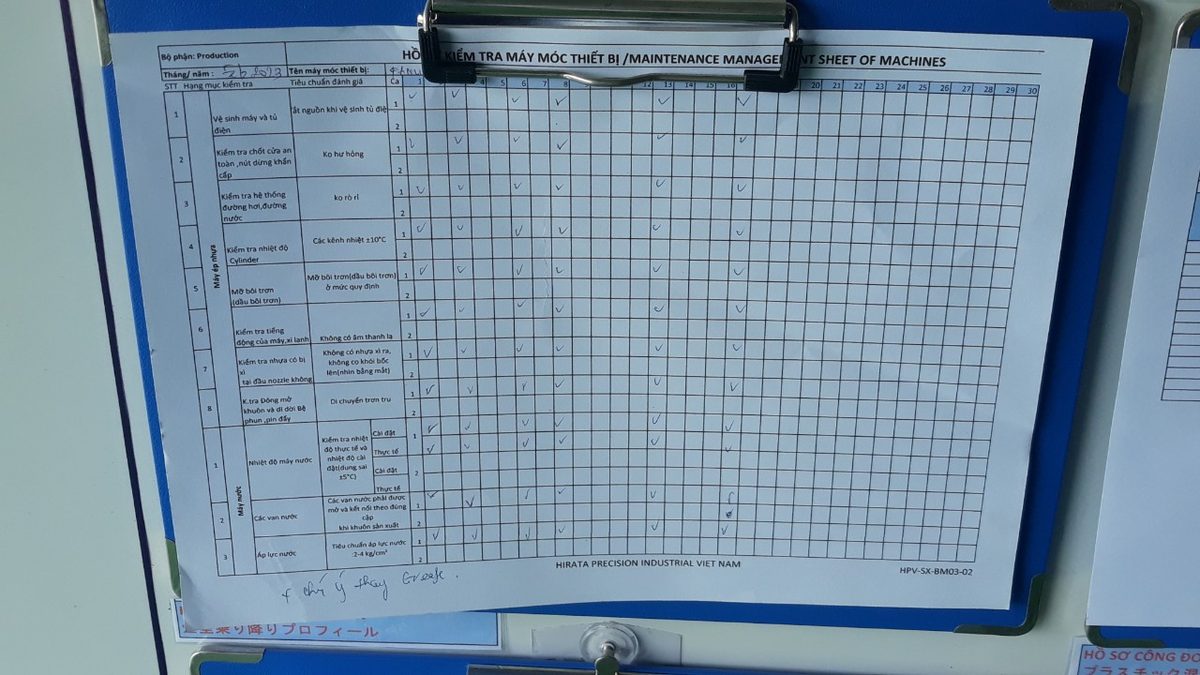
Each machine at Hirata carries its maintenance log. This Japanese-standard practice — posting inspection records directly on equipment — ensures that maintenance intervals are visible, overdue services are flagged, and the production team can't unknowingly run a machine that's past its service window. Machines that are serviced on schedule hold tolerance. DEWIN auditors verify maintenance logs as part of Pillar 2 (Equipment & Capability).
6. Finished Parts Storage — Batch Traceability in Labeled Baskets
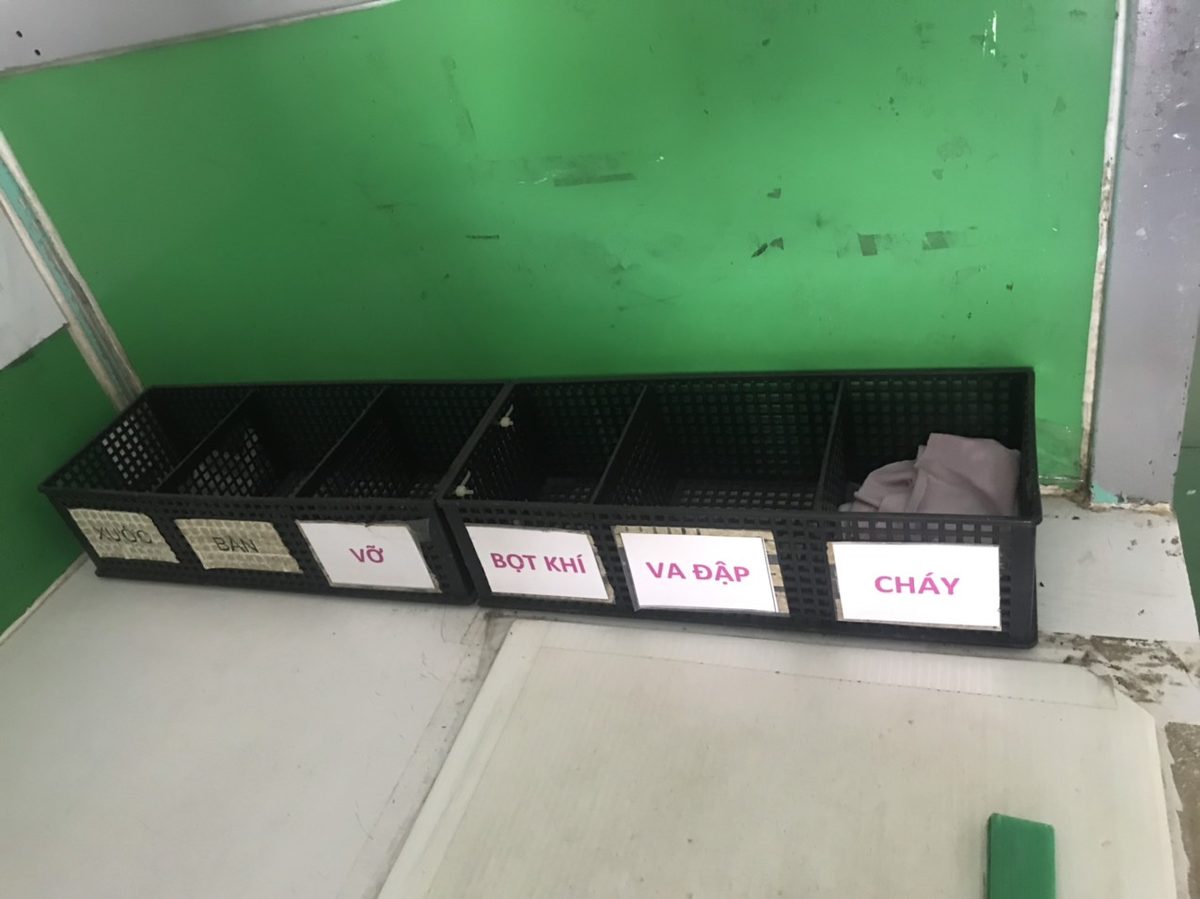
Finished parts are stored in labeled baskets by production batch. Lot segregation is fundamental to traceability — if a dimensional issue surfaces downstream, the factory can isolate the specific production run without recalling an entire inventory. DEWIN's Dolphin audit Pillar 4 (Traceability) evaluates exactly this: can the factory trace any part back to its production date, machine, and inspection record? Hirata's storage system says yes.
Dolphin Audit Results: Hirata Across All 5 Pillars
DEWIN's 50-point Dolphin audit evaluates every factory across five pillars before they enter our network. Here's how Hirata scored:
| Pillar | What We Evaluated | Result |
|---|---|---|
| 1. Quality Systems | QC documentation, inspection independence, NCR process | ✓ Pass — VMM logs, dedicated inspection zone, batch records |
| 2. Equipment & Capability | Machine condition, calibration status, precision measurement tools | ✓ Pass — 2× 2D VMM, maintained equipment with posted inspection records |
| 3. Workplace Organization | 5S compliance, layout, visual management, cleanliness | ✓ Pass — 5S criteria posted and enforced, logical production flow |
| 4. Traceability | Lot control, incoming material records, finished goods labeling | ✓ Pass — Labeled batch storage, production lot segregation |
| 5. Process Discipline | Work instructions, operator training, machine maintenance culture | ✓ Pass — Japanese-standard maintenance records, documented production processes |
Hirata vs. Unverified Alternatives
| Factor | Hirata + DEWIN | Unverified Vietnam Supplier |
|---|---|---|
| Dimensional inspection method | 2D VMM — objective optical data | Typically hand calipers |
| FAI / PPAP documentation | Supported via VMM reports | Rarely available |
| Lot traceability | Batch-labeled storage | Often mixed storage |
| Workplace standards | 5S enforced daily | Variable |
| Machine maintenance documentation | Posted on each machine | Informal or absent |
| On-ground quality oversight | DEWIN QC team pre-shipment | Buyer responsibility |
FTA Advantage: Vietnam's Tariff Access for Global Buyers
Parts sourced from Hirata through DEWIN benefit from Vietnam's extensive free trade agreement network. Key agreements for precision machined parts:
- CPTPP — Zero or near-zero duty for Canada, Australia, Japan, Singapore, New Zealand, and others
- EVFTA — Preferential access to EU markets (27 member states)
- RCEP — Streamlined trade with ASEAN, China, Japan, South Korea, Australia
- US–Vietnam bilateral trade — Vietnam not subject to US Section 301 tariffs
DEWIN handles Certificate of Origin documentation and FTA paperwork as part of every export order — buyers receive a full export documentation package, not just a shipping label.
Interested in sourcing precision machined parts from Vietnam?
Browse our verified factory network — 179+ audited suppliers across 50+ processes. Or request a sourcing consultation and we'll match your specific requirements.