Vietnam Injection Mold Tooling: Precision Mold Making Guide 2026
March 9, 2026 · 17 min read
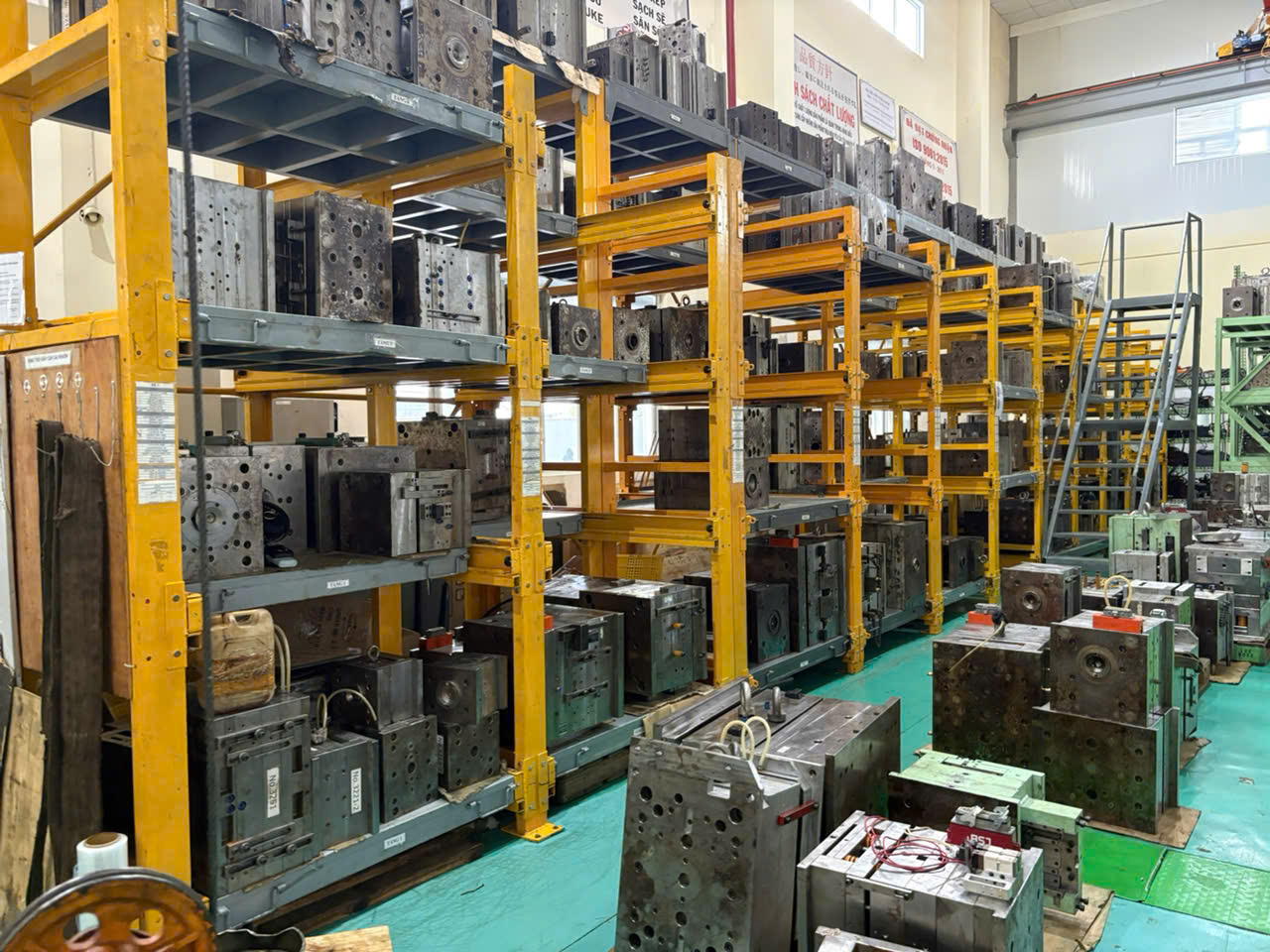
Vietnam's mold making industry has grown from a handful of Japanese-invested shops in the early 2010s to a mature ecosystem of 200+ mold makers capable of producing precision injection molds for automotive, electronics, medical, and consumer products. With tooling costs 40–60% below China and 55–70% below Europe/US, Vietnamese mold makers are attracting global buyers looking for quality tooling at competitive prices.
This guide covers Vietnam's mold making capabilities — the equipment, steel grades, quality standards, regional clusters, and factory evaluation criteria that international sourcing teams need to make informed tooling decisions.
Vietnam's Mold Making Industry: 2026 Landscape
Vietnam's precision mold industry has grown at 22% CAGR since 2019, driven by FDI from Japan, Korea, and Taiwan. The industry has evolved through three distinct phases:
- 2005–2015: Foundation phase — Japanese companies (Misumi, Futaba, Takagi Seiko) established mold shops to support Honda, Toyota, and Canon supply chains. Vietnamese technicians trained under Japanese mentorship, learning 5S, TPM, and precision mold making practices.
- 2015–2022: Growth phase — Samsung's massive investment in Vietnam ($18B+) brought Korean mold makers and component suppliers. Taiwanese companies followed, serving Foxconn and electronics OEMs. Local Vietnamese mold shops began emerging, founded by engineers trained at Japanese/Korean facilities.
- 2022–present: Maturity phase — Vietnamese-owned mold shops now compete directly with Chinese mold makers on quality and lead time. High-speed CNC, 5-axis machining, and Moldflow analysis are standard at top-tier shops. The US-China trade war has accelerated demand from Western buyers seeking China alternatives.
Regional Mold Making Clusters
- Ho Chi Minh City & Binh Duong — The largest cluster. 120+ mold shops. Strong in consumer products, electronics, and general industrial molds. Japanese and Korean-invested shops mixed with established Vietnamese operations.
- Dong Nai & Long An — Heavy industry focus. Automotive and large mold specialists. Closer to deep-water ports (Cat Lai, Cai Mep) for efficient mold shipping.
- Hanoi & Bac Ninh — Samsung ecosystem. Strong in precision electronic component molds, connector molds, and micro-molding tooling. Canon, Samsung, and LG supply chain mold makers concentrated here.
- Hai Phong — Growing cluster near the northern deep-water port. Automotive mold makers serving VinFast and Japanese OEM supply chains.
Equipment & Capabilities: What Vietnam Mold Shops Offer
Top-tier Vietnamese mold shops operate equipment comparable to Chinese and Taiwanese shops. Here's what to expect at a qualified facility:
CNC Machining Centers
- High-speed milling: Makino (Japan), OKK (Japan), Roku-Roku (Japan), Fanuc Robodrill — spindle speeds 20,000–42,000 RPM for mirror-finish cavity machining
- 3-axis VMC: Mazak, Doosan, Haas — for mold base work, core/cavity roughing
- 5-axis: DMG Mori, Makino D-series — for complex geometry and electrode machining. Available at premium shops.
- Gundrilling: For deep cooling channels. Available at most shops handling molds >500mm.
EDM (Electrical Discharge Machining)
- Wire EDM: Sodick, Mitsubishi, Fanuc — ±0.003mm accuracy. Standard at all serious mold shops.
- Sinker EDM: Sodick, Makino EDNC — for complex cavity features, ribs, and textured surfaces that can't be CNC machined.
- Mirror EDM: Sodick ALC/ALN series — for Ra 0.1μm optical-grade cavity surfaces. Available at premium shops serving lens and cosmetics mold buyers.
Inspection & Quality
- CMM: Mitutoyo, Zeiss, Hexagon — programmable coordinate measuring for T1 sample dimensional verification
- Optical measurement: Keyence, OGP — for 2D profile and surface finish verification
- Surface roughness testers: Mitutoyo SJ-series — verifying SPI finish grades
- Moldflow software: Autodesk Moldflow, Moldex3D — fill simulation and warpage prediction
Mold Tooling Cost Benchmarks: Vietnam 2026
Real pricing from our audited mold maker network. All prices in USD, P20 steel, cold runner, SPI B-2 finish unless otherwise noted:
Simple Molds (caps, covers, simple housings — no side actions)
- Single cavity, P20: $5,000–12,000
- 4-cavity, P20: $12,000–25,000
- 8-cavity, P20: $20,000–40,000
Medium Complexity (electronics housings, automotive trim — 1–2 side actions)
- Single cavity, P20: $10,000–22,000
- Single cavity, H13: $14,000–28,000
- 4-cavity, P20, hot runner: $30,000–55,000
High Complexity (multi-action, tight tolerance, optical)
- Single cavity, H13, 3+ actions, hot runner: $20,000–45,000
- 8-cavity, H13, hot runner, SPI A-1 finish: $60,000–120,000
- 2K (two-shot) mold, rotary table: $25,000–60,000
Prototype / Bridge Tooling
- Aluminum 7075 prototype mold, single cavity: $2,000–6,000
- Soft steel (S50C) bridge mold, single cavity: $3,500–8,000
- Lead time: 2–3 weeks (aluminum) · 3–4 weeks (soft steel)
Mold Steel: What Vietnamese Shops Source
Steel quality determines mold life. Vietnamese mold makers source from established international suppliers:
- Daido Steel (Japan) — NAK80, PX5, DHA1. The premium choice. Daido has a distribution warehouse in Ho Chi Minh City, ensuring 2–3 day delivery for standard sizes.
- Assab / Uddeholme (Sweden) — Stavax (S136 equivalent), Impax Supreme (P20 equivalent), Orvar Superior (H13). Widely available through SSAB's Vietnam distributor network.
- Bohler (Austria) — M200 (P20), M340 (corrosion resistant), W302 (H13). Strong presence in Vietnam's southern industrial zones.
- Chinese steel — Some shops use Chinese-origin P20 and H13 at 20–30% lower cost. Acceptable for simple production molds but verify with mill certificates. For critical molds, specify Japanese or European steel.
Always request: Mill certificates (material test reports) showing chemical composition, hardness, and origin. A reputable mold maker provides these automatically.
Quality Standards & Certifications
What quality systems to look for when evaluating Vietnamese mold shops:
- ISO 9001:2015 — Minimum bar for any production mold maker. Verifies documented quality management system.
- IATF 16949 — Required for automotive mold makers. Means the shop understands PPAP, APQP, and FMEA requirements.
- ISO 13485 — For medical mold makers. Validates cleanroom awareness, traceability, and biocompatibility considerations.
- SPI/SPE mold classification — Class 101 (1M+ shots, hardened steel) through Class 105 (prototype, <500 shots). Verify the shop builds to your required class.
Standard Mold Trial & Acceptance Process
- T0 trial — Internal test at mold shop. Verify mold opens/closes correctly, ejection works, basic fill pattern confirmed. Shop fixes any mechanical issues.
- T1 trial — First official samples sent to customer. Dimensional report (CMM data), material certification, and sample parts (typically 20–50 shots). This is where 80% of issues are identified.
- T2 trial — After T1 corrections. Fine-tuning dimensional accuracy, surface finish, and gate vestige. Most molds are approved at T2.
- T3 trial (if needed) — For complex molds requiring additional iteration. Rare if DFM and Moldflow were done properly upfront.
- Production trial run — 500–2,000 consecutive shots to verify process stability, cycle time, and part consistency. Cpk data on critical dimensions.
How to Evaluate a Vietnam Mold Maker: Factory Visit Checklist
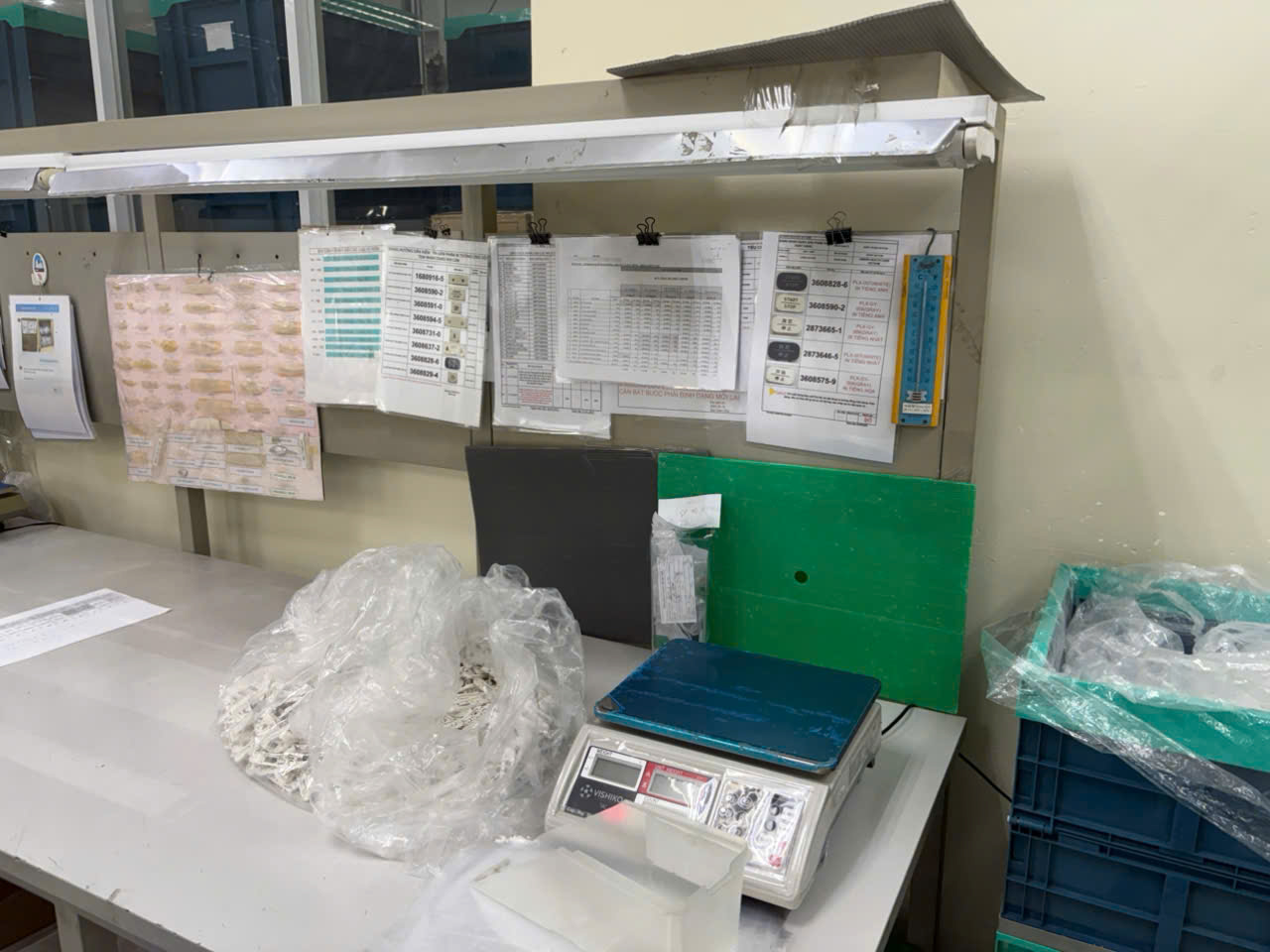
Whether you visit in person or through an audit partner, here's what to assess:
- Machine age and condition — CNC machines newer than 10 years? Well-maintained? Spindle accuracy certificates available? A shop running 20-year-old machines with worn ballscrews can't hold mold tolerances.
- Climate control — Is the CNC area temperature-controlled? Thermal expansion in a 35°C shop (common in Vietnam without AC) causes 0.01–0.02mm dimensional shift on a 300mm workpiece. Top mold shops maintain 22–24°C in machining areas.
- Design team — How many mold designers? What CAD/CAM software (NX, PowerMill, CIMATRON, Mastercam)? Do they design in-house or outsource? A shop with 3+ experienced designers signals serious capability.
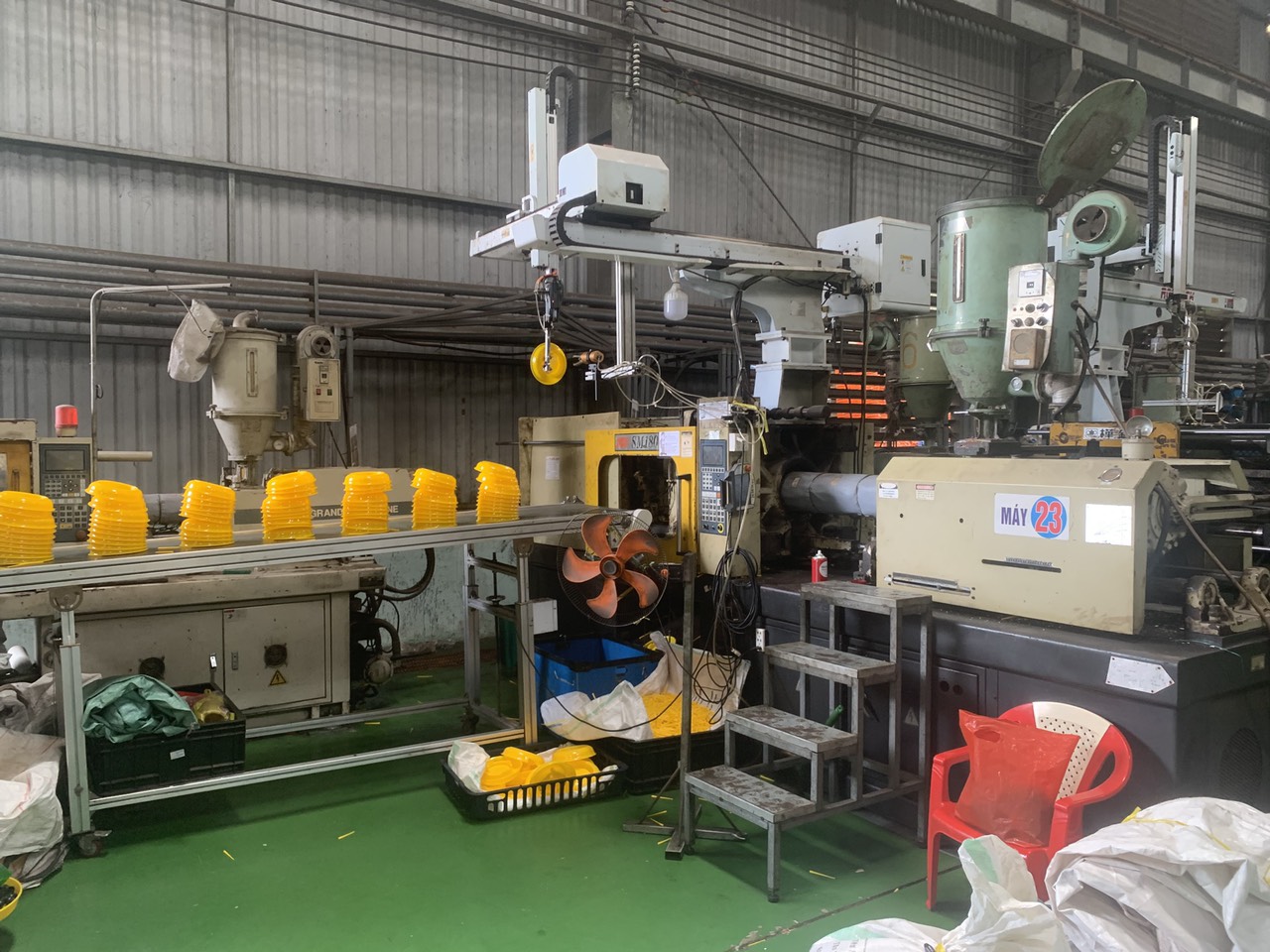
- Mold trial presses — Does the shop have its own injection molding machines for trials? Sizes should cover the range of molds they build. A mold shop without trial presses means your T1 samples are run at a subcontracted molding shop — adding time and reducing quality control.
- Customer portfolio — Who are their existing customers? Japanese/Korean/European OEM work indicates higher quality standards. Ask for references you can contact.
- Mold storage — How are completed molds stored? Proper preservation (rust preventive, sealed, climate-controlled storage) shows attention to long-term mold care. Molds sitting in open warehouse areas in Vietnam's humidity will corrode.
Mold Types & Specialty Capabilities
- Two-shot / overmold tooling — Rotary plate or core-back molds for multi-material parts (hard/soft, different colors). Growing capability in Vietnam. Available at 30+ shops in the HCMC cluster.
- Insert mold tooling — For metal-insert-molded parts (connectors, bushings, threaded inserts). Standard capability at most medium and large shops.
- Micro-mold tooling — Parts under 1 gram, micro-features, tight tolerances. Specialized capability — 10–15 shops in Vietnam with proven track record. Mostly concentrated in the Samsung/Canon supply chain (Bac Ninh, HCMC).
- Large mold tooling — Molds over 2 tons for automotive bumpers, appliance housings, industrial containers. Requires large CNC capacity (1,500mm+ travel). 20+ shops capable, mostly in Dong Nai and Binh Duong.
- Stack mold tooling — Doubles output without increasing clamp tonnage. Specialized capability for high-volume consumer products. Available at 5–10 shops.
Trade Advantages for International Buyers
- US buyers: Zero Section 301 tariffs on Vietnamese molds (HTS 8480.71). Chinese molds face 25% tariff. This alone makes Vietnam 15–25% cheaper than China on landed cost.
- EU buyers: EU-Vietnam Free Trade Agreement (EVFTA) eliminates tariffs on Vietnamese molds. Chinese molds face standard EU duties.
- Japanese/Korean buyers: CPTPP and RCEP trade agreements provide preferential rates. Many Japanese companies are actively moving mold sourcing from China to Vietnam.
- All buyers: Vietnam's labor cost advantage (skilled mold maker: $8–15/hr vs. $15–30/hr in China's coastal regions) keeps tooling costs fundamentally lower.
Shipping & Logistics for Mold Export
- Mold crating: Wooden crate with fumigation certificate (ISPM-15). Mold preserved with VCI (Vapor Corrosion Inhibitor) bags/paper. Interior foam/rubber padding to prevent impact damage. Typical crating cost: $200–600 depending on mold size.
- Ocean freight (LCL): $300–800 to US West Coast, $400–1,000 to US East Coast, $250–600 to Europe, $200–400 to Japan/Korea. Transit: 18–25 days to US, 20–30 to Europe.
- Air freight (urgent): $8–15/kg. A 500 kg mold costs $4,000–7,500 by air. Use only when schedule demands it — ocean is 90% cheaper.
- Insurance: Always insure mold shipments at full replacement value. Marine cargo insurance costs 0.3–0.5% of declared value.
Get a Mold Tooling Quote from Vietnam
Send us your 3D CAD file (STEP preferred) and volume estimate. Our team will match your project to the right mold maker from our audited network — based on complexity, material, and industry requirements. You'll receive a DFM report, Moldflow analysis, tooling quote, and factory profile within 48 hours.