Food-Grade Stainless Steel Manufacturing in Vietnam: SS304/316L CNC Machining for Global Food Equipment OEMs
March 12, 2026 · 15 min read
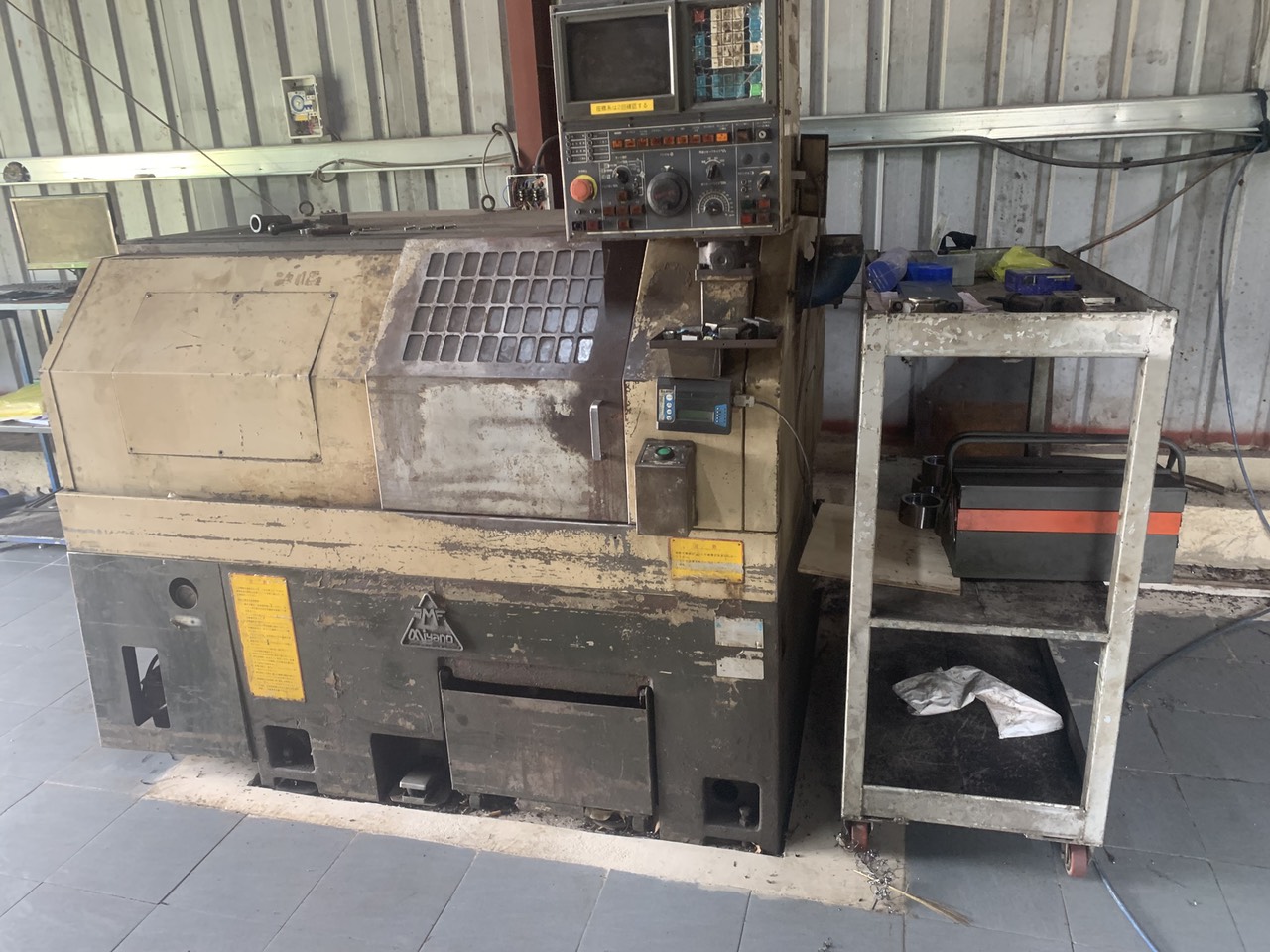
Vietnam has emerged as a leading source for food-grade stainless steel components, serving food equipment manufacturers across the US, Europe, Japan, Australia, and Southeast Asia. The country's combination of precision CNC capability, competitive labor costs for finishing operations, and established stainless steel supply chains from POSCO (Korea) and Nippon Steel (Japan) makes it a natural fit for the demanding requirements of food-grade machining.
This guide covers Vietnam's food-grade stainless steel manufacturing capabilities from a global sourcing perspective — what equipment and certifications are available, which surface finish standards Vietnamese factories can meet, and how to evaluate suppliers for FDA, 3-A Sanitary, and EHEDG compliance.
Vietnam's Stainless Steel CNC Capabilities for Food Equipment
Vietnam's precision machining sector has invested heavily in stainless-capable equipment over the past five years, driven by demand from food equipment OEMs in the US, Europe, and Japan. Here's what's available on the ground:
CNC Turning — Shafts, Nozzles, Fittings
- Equipment: Mazak QTN, Doosan Lynx, Fanuc Robodrill turning centers with live tooling and high-pressure coolant (70–100 bar) — essential for stainless chip evacuation
- Capacity: OD 6–300mm, lengths to 600mm. Multi-axis turning/milling in single setup reduces handling and maintains concentricity
- Typical food parts: Filling nozzles, valve stems, mixer shafts, pump sleeves, sanitary fittings, dosing pistons
- Tolerances: ±0.01mm on diameters, ±0.02mm on lengths — standard for food equipment precision requirements
CNC Milling — Manifolds, Brackets, Housings
- Equipment: Mazak VCN, Doosan DNM, Fanuc α-DiA series vertical machining centers. Several factories operate 5-axis DMG MORI and Makino machines for complex food equipment geometries
- Capacity: Work envelopes up to 1200×600×500mm, with pallet changers for unattended production runs
- Typical food parts: Valve bodies, manifold blocks, conveyor brackets, motor mounts, inspection port frames, CIP system headers
- Key capability: Internal corner radii down to R0.5mm (critical for cleanability per 3-A and EHEDG guidelines)
TIG Welding — Sanitary Weldments
- Capability: Certified TIG welders (AWS D18.1 — Stainless Steel Welding for the Hygienic/Sanitary Industry) available at select Vietnam factories
- Autogenous TIG: Available for thin-wall tube-to-fitting joints where no filler metal is acceptable — critical for dairy and pharmaceutical piping
- Orbital welding: Select factories have invested in orbital TIG equipment for sanitary tube-to-tube welds with controlled ID bead profiles
- Post-weld treatment: Weld zone pickling + passivation restores the corrosion-resistant passive layer disrupted by welding heat
Surface Finishing Capabilities: From Machined to Mirror
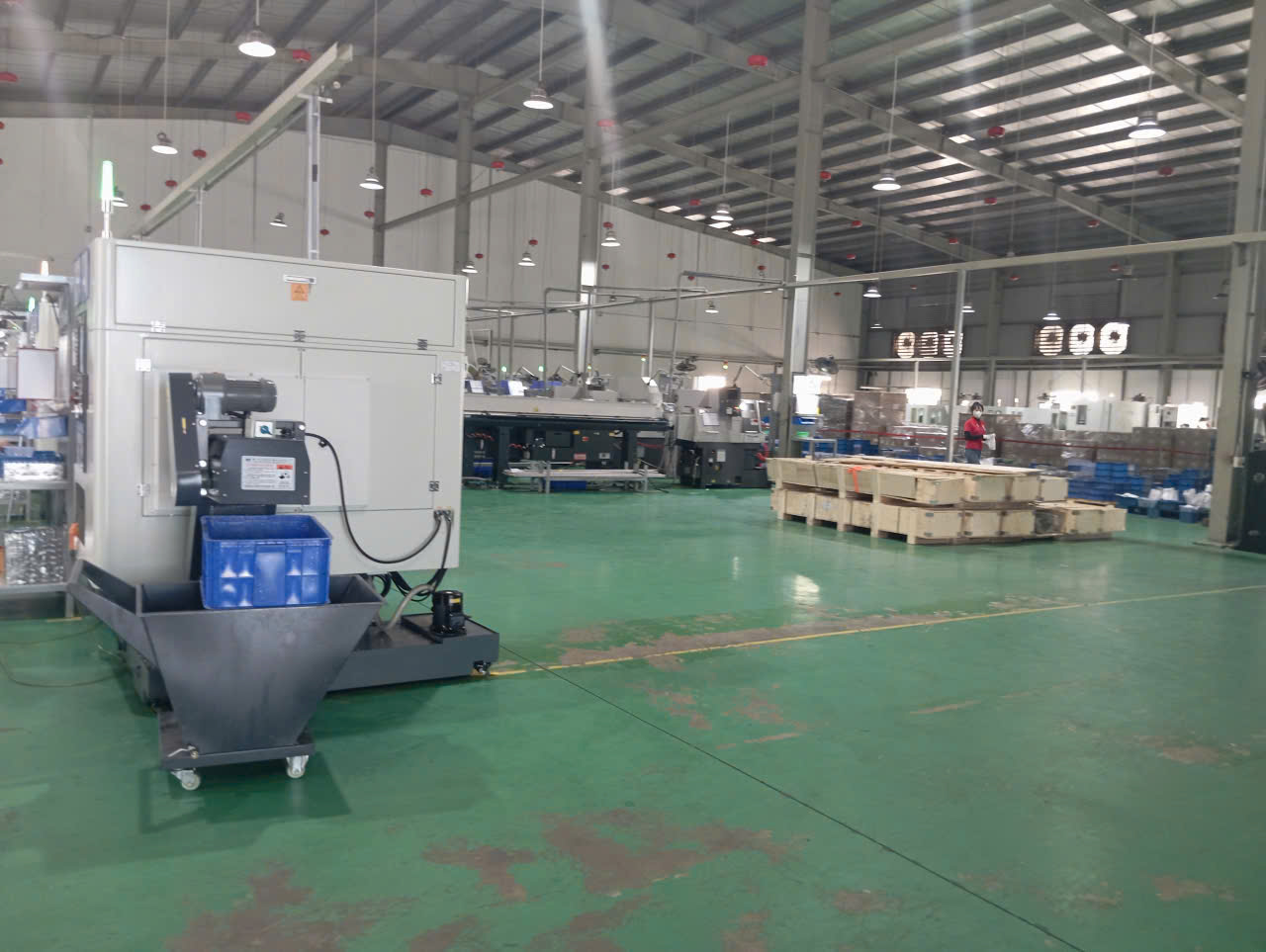
Surface finish is the critical differentiator in food-grade manufacturing. Vietnam's large pool of skilled finishing technicians — combined with modern polishing and electropolishing equipment — enables all standard food-grade surface specifications:
Mechanical Polishing
- Grit progression: 80 → 120 → 180 → 240 → 320 grit, with each step removing scratches from the previous. Skilled polishers are trained to work uni-directionally for consistent grain pattern
- Achievable finish: Ra 0.8μm (32 μin) at 180 grit — meets 3-A Sanitary baseline. Ra 0.4μm (16 μin) at 320 grit with careful technique
- Cost advantage: Vietnam polishing labor costs $4–6/hr vs $30–50/hr in the US, $12–18/hr in EU. For parts requiring 1–4 hours of hand polishing, this translates to 70–85% savings on finishing operations alone
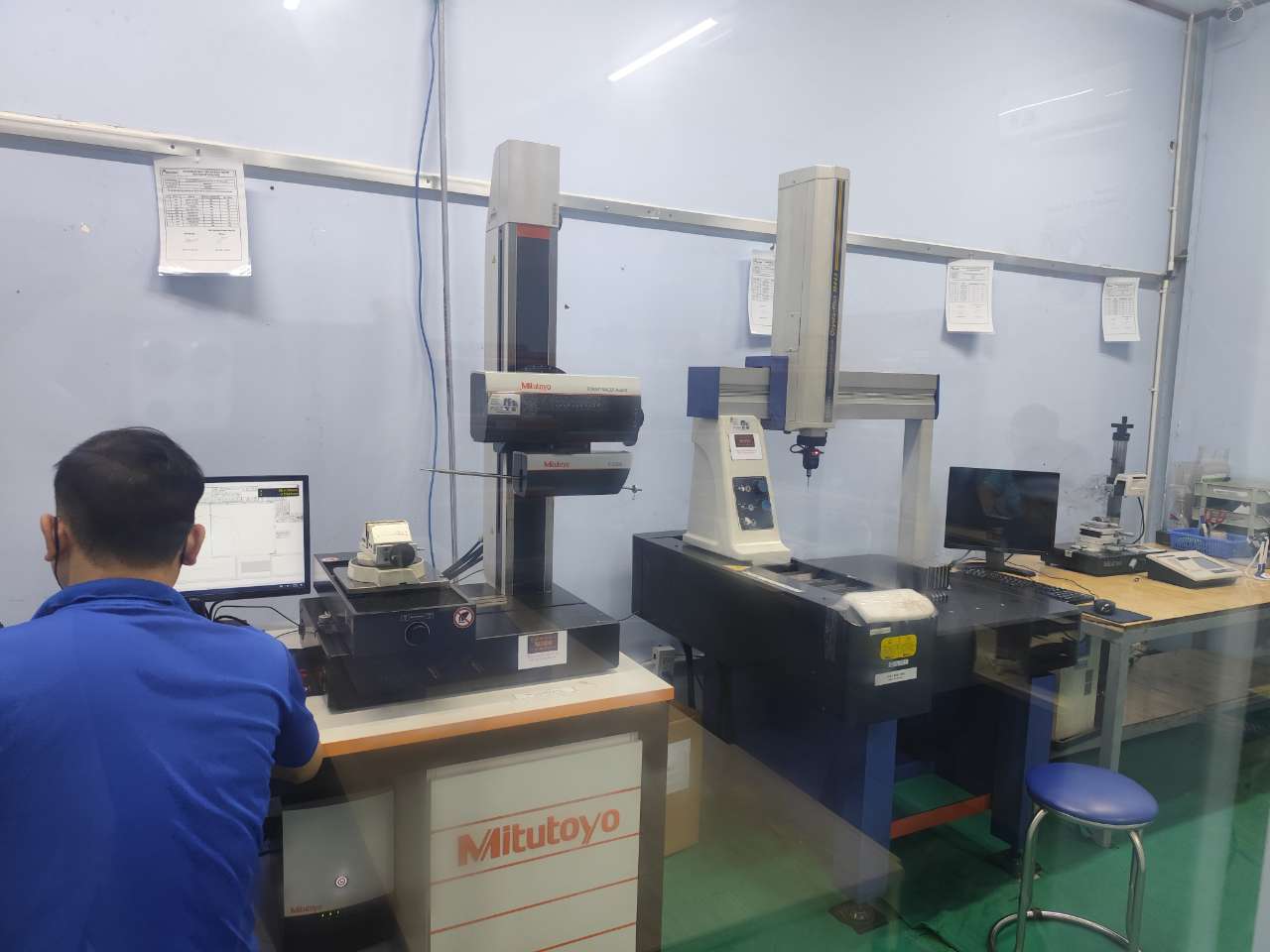
- Inspection: Portable profilometers (Mitutoyo SJ-210 or equivalent) used for in-process and final verification
Electropolishing
- Process: Electrochemical metal removal in phosphoric/sulfuric acid electrolyte — dissolves peaks preferentially, producing a microscopically smooth, bright surface
- Achievable finish: Ra 0.25–0.4μm (10–16 μin) — the standard for dairy, pharmaceutical, and aseptic food processing equipment
- Availability: Multiple Vietnam facilities with dedicated electropolishing lines, capable of handling parts up to 800mm. Controlled current density and temperature monitoring ensure consistent results
- Added benefit: Electropolishing improves corrosion resistance by 30× over unpolished stainless — the smoothed surface has a higher Cr/Fe ratio and fewer initiation sites for pitting
Passivation
- Citric acid passivation: Per ASTM A967 Method C — the environmentally preferred method, increasingly mandated by European food equipment OEMs
- Nitric acid passivation: Per ASTM A967 Method A — the traditional method, still widely used for applications requiring maximum passive layer thickness
- Verification: Copper sulfate test (ASTM A967 Annex A1) and water immersion test performed as standard on first articles and sampled during production
Stainless Steel Material Supply Chain in Vietnam
Material sourcing is a common concern for buyers new to Vietnam. The reality: Vietnam has excellent stainless steel availability from premium mills, often the same mills supplying European and Japanese food equipment manufacturers.
Primary Steel Sources
- POSCO (Korea): Major presence in Vietnam — operates POSCO Vietnam (Bà Rịa–Vũng Tàu) producing cold-rolled stainless. SS304, 316L, 430 available ex-stock in Ho Chi Minh City. Full EN 10204 3.1 mill test reports
- Nippon Steel (Japan): Premium bar stock and plate via Vietnam distributors. Preferred by Japanese food equipment OEMs sourcing from Vietnam — familiar quality and documentation standards
- Tsingshan (China): Cost-competitive 304/316L — adequate for non-critical applications. Experienced buyers request POSCO or Nippon Steel for food-grade product contact parts
- Domestic mills: Hoa Sen Group and Nam Kim produce basic 304 plate and sheet. Acceptable for structural/non-contact food equipment components
Material Traceability
Every food-grade stainless steel part from DEWIN-audited factories ships with complete material traceability:
- EN 10204 Type 3.1 mill test certificate showing heat number, chemical composition, and mechanical properties
- XRF verification available on request — handheld analyzers confirm grade composition on the actual machined part, not just the incoming bar stock
- Heat number marking on parts when required (laser engraved or electrochemical etching — no stamp marking on food contact surfaces)
Quality Certifications and Standards Compliance
Vietnam's food-grade stainless steel suppliers serve regulated markets globally. Here are the certifications and standards available:
- ISO 9001:2015: Standard across all DEWIN-audited CNC factories — the baseline for quality management systems
- ISO 22000 / FSSC 22000: Available at select factories serving food industry customers — the food safety management system standard
- FDA 21 CFR 175–178: Material compliance verified through mill certifications and ASTM grade specifications — applicable for US-bound food contact components
- 3-A Sanitary Standards: Design and finish requirements met through controlled machining and polishing processes — critical for US dairy and beverage equipment
- EHEDG (European Hygienic Engineering & Design Group): Design guidelines compliance for European food equipment OEMs — particularly relevant for German, Dutch, and Scandinavian buyers
- CE marking support: Documentation packages supporting Machinery Directive 2006/42/EC for components integrated into CE-marked food processing equipment
- NSF/ANSI 169: Special purpose food equipment standards compliance — available for US and Canadian market requirements
Cost Benchmarks: Vietnam vs. Global Sources
Vietnam's cost advantage for food-grade stainless is driven by finishing labor — polishing, electropolishing, passivation, and inspection are all labor-intensive operations where Vietnam's $4–6/hr skilled rate creates significant savings versus any developed economy.
Comparative Pricing (500-unit batch, ex-works)
- CNC turned filling nozzle (316L, EP to Ra 0.4μm): Vietnam $15–22 | China $17–25 | EU $48–68 | US $42–58
- CNC milled conveyor bracket (304, Ra 0.8μm): Vietnam $7–11 | China $8–13 | EU $22–32 | US $18–28
- CNC turned mixer shaft (316L, full EP): Vietnam $42–62 | China $48–70 | EU $135–185 | US $120–165
- Welded sanitary frame (304L, TIG, passivated): Vietnam $110–165 | China $130–190 | EU $380–520 | US $340–480
Vietnam pricing is 5–15% below China on an ex-works basis. For US buyers, the gap widens further due to 0% vs. 25% Section 301 tariffs. European and Japanese buyers benefit from Vietnam's growing network of free trade agreements (EVFTA, CPTPP, RCEP).
Trade Agreement Advantages
- US buyers: 0% Section 301 tariff (vs. 25% on Chinese equivalents). Standard US duty 0–3.4% on most stainless steel components
- EU buyers (EVFTA): Reduced or zero tariffs on manufactured goods from Vietnam — the EU-Vietnam Free Trade Agreement eliminates up to 99% of customs duties
- Japan/Australia/NZ (CPTPP): Preferential tariff rates under the Comprehensive and Progressive Agreement for Trans-Pacific Partnership
- ASEAN buyers (ATIGA): Zero tariffs on intra-ASEAN trade for qualifying manufactured goods
- Korea (VKFTA): Reduced tariffs under the Vietnam-Korea Free Trade Agreement — complementing the POSCO material supply chain advantage
Food Equipment Components Vietnam Factories Produce
DEWIN's audited factory network produces the following food-grade stainless components for global OEMs:
- Filling & packaging machinery: Nozzles, pistons, cylinders, valve seats, dosing chambers — 316L electropolished
- Conveyor systems: Side guides, brackets, sprocket shafts, chain links, wear strips — 304 mechanically polished
- Mixing equipment: Agitator shafts, impellers, tank fittings, bearing housings — 316L for product contact
- Cutting & slicing: Blade holders, guide plates, adjustment mechanisms — hardened 420 or 440C for wear surfaces
- CIP systems: Spray balls, headers, manifolds, divert valves — 316L with orbital-welded connections
- Heat exchangers: Tube sheets, baffle plates, end caps — 316L with controlled surface finish for thermal efficiency
- Structural frames: Equipment frames, platforms, guarding — 304 welded and passivated
How to Get Started: RFQ Process
For the most accurate quote and fastest response on food-grade stainless steel components:
- 1. Send drawings: 2D PDF with GD&T + 3D STEP file. Mark product contact surfaces clearly
- 2. Specify material & finish: Grade (304/316L/other) + surface finish Ra per surface + passivation requirement
- 3. State volumes: Annual quantity + batch size for accurate pricing — unit costs decrease significantly from 100 to 1,000+ parts
- 4. Note regulatory: FDA, 3-A, EHEDG, NSF, or other food safety standards applicable to your market
- 5. Documentation needs: Mill certs, dimensional reports, surface finish reports, passivation certificates, CoC
Source Food-Grade Stainless Steel from Vietnam
Send us your food equipment part drawings. We'll match you with audited Vietnam factories capable of meeting FDA, 3-A, EHEDG, and CE requirements — complete with factory photos, equipment lists, and competitive pricing.
Request a Quote →