Electroplating & Metal Plating in Vietnam: Processes, Costs & Sourcing Guide
March 6, 2026 · 15 min read
Electroplating deposits a thin metallic layer onto a substrate through electrolysis — typically 0.5–50µm thick — to add corrosion resistance, wear hardness, electrical conductivity, solderability, or decorative appearance. It's one of the most common secondary operations in custom parts manufacturing, yet pricing and quality vary wildly between plating shops. A poorly specified plating job can double your reject rate; a well-sourced one can slash your surface finishing costs by 40–60% compared to US plating houses.
Vietnam's plating industry has matured significantly, driven by the electronics and automotive sectors. This guide covers every plating process available in Vietnam, with real cost data, spec-writing guidance, and common pitfalls US buyers encounter.
Plating Processes Available in Vietnam
Zinc Plating — The Corrosion Protection Workhorse
- Process: Electrolytic zinc deposition from alkaline or acid zinc bath
- Typical thickness: 5–25µm (most common: 8–12µm for general industrial use)
- Salt spray performance: 8µm clear chromate: 96–120 hours | 12µm yellow chromate: 200–300 hours | 8µm + trivalent chromate + topcoat: 500+ hours
- Color options: Clear (blue-ish), yellow (gold), black, olive drab
- Vietnam cost (barrel plating): $0.03–0.15/part for small fasteners | $0.20–0.80/part for brackets and housings
- Vietnam cost (rack plating): $0.15–0.50/part for small parts | $0.50–3.00/part for large parts (>200mm)
- Spec reference: ASTM B633 (Type I: no supplementary chromate | Type II: colored chromate | Type III: colorless chromate)
- RoHS note: Hexavalent chromate (Cr6+) is banned under RoHS. Specify trivalent chromate (Cr3+) passivation — all reputable Vietnam platers have transitioned
Nickel Plating — Decorative & Functional
- Bright nickel: 10–20µm, mirror finish, HV 500–600. Decorative applications (consumer hardware, faucets, automotive trim)
- Electroless nickel (EN): Uniform thickness regardless of geometry (±10% variation vs. ±50% for electrolytic). 10–50µm thickness. HV 500 as-plated, HV 1000+ after 400°C heat treatment
- Sulfamate nickel: Low-stress deposit for functional applications (mold repair, engineering builds). 25–250µm
- Vietnam cost (bright nickel, rack): $0.30–1.50/part | Electroless nickel: $0.50–4.00/part (higher chemistry cost)
- Spec reference: ASTM B689 (electroplated nickel) | ASTM B733 (electroless nickel, SC1–SC4 service conditions)
- When to choose EN over electrolytic: Complex geometries with blind holes, internal threads, or recessed areas where electrolytic nickel would plate thin. EN deposits uniformly everywhere the solution contacts
Chrome Plating — Decorative & Hard
- Decorative chrome (0.25–1.0µm): Always over nickel undercoat (typically 15–25µm Ni + 0.5µm Cr). The "chrome look" — bright, reflective, blue-white tone
- Hard chrome (25–250µm): Applied directly to steel substrate. HV 850–1050 hardness, excellent wear resistance. Used for piston rods, hydraulic cylinders, mold surfaces
- Vietnam cost (decorative Ni+Cr, rack): $0.50–3.00/part for small items | $3.00–12.00/part for large decorative pieces
- Vietnam cost (hard chrome, per dm²): $0.80–2.50/dm² for 25–50µm | $1.50–4.00/dm² for 100–250µm
- Environmental note: Hard chrome uses hexavalent chromium (Cr6+, classified carcinogen). Vietnam shops must comply with environmental regulations. Verify the plater has proper wastewater treatment. For EU markets, consider HVOF thermal spray or PVD as Cr6+-free alternatives
- Spec reference: ASTM B177 (decorative) | ASTM B650 / AMS 2460 (hard chrome)
Tin Plating — Solderability & Food Contact
- Typical thickness: 3–15µm (electrical connectors) | 15–30µm (food contact)
- Why tin: Excellent solderability (even after 12+ months storage), RoHS compliant, low contact resistance, FDA-acceptable for food contact
- Bright vs. matte: Bright tin risks tin whisker growth (short circuits in electronics). Specify matte tin for aerospace/military/high-reliability electronics
- Vietnam cost: $0.05–0.30/part (barrel) | $0.15–0.80/part (rack)
- Spec reference: ASTM B545
Gold & Silver Plating — Connectors & High-End Applications
- Gold (0.5–2.5µm over nickel strike): Required for high-reliability electrical contacts. Provides <0.5mΩ contact resistance, doesn't oxidize
- Silver (3–15µm): Best electrical conductivity of any plating. Used for busbars, RF connectors, high-current contacts
- Vietnam cost (gold): $1.00–8.00/part depending on area and thickness (gold price ~$87/gram in March 2026)
- Vietnam cost (silver): $0.30–2.00/part
- Selective plating: Masking areas to plate only contact zones — reduces gold/silver usage 60–80%. Vietnam shops handle this routinely for connector manufacturers
Rack vs. Barrel Plating: Cost & Quality Trade-offs
This is the single most important decision in plating cost optimization:
Barrel Plating (Bulk Processing)
- How it works: Parts tumble in a perforated barrel submerged in plating bath. Current flows through parts contacting each other
- Best for: Small parts (<150mm), high volumes (>500 pcs), parts that can touch without damage
- Cost advantage: 50–75% cheaper than rack plating (no fixturing labor)
- Limitations: Thickness uniformity ±30–40%, surface contact marks, parts must withstand tumbling without deformation
- Typical batch size: 50–500 kg per barrel load
- NOT suitable for: Parts with tight tolerance plating requirements, polished/decorative surfaces, fragile geometries, or parts >150mm
Rack Plating (Individual Fixturing)
- How it works: Parts individually mounted on conductive racks with clips/hooks/wires. Each part has controlled exposure to plating current
- Best for: Large parts, precision thickness requirements, decorative finishes, fragile parts
- Thickness uniformity: ±10–15% (standard) | ±5% with auxiliary anodes/shields
- Rack mark location: Specify where rack contact points should be — ideally on non-critical surfaces. This is the #1 cosmetic complaint in rack plating
Cost Comparison Example: Zinc Plating a Steel Bracket (60×40×20mm)
- Barrel (Qty 5,000): Vietnam $0.06/part | China $0.07/part | US $0.18–0.30/part
- Rack (Qty 5,000): Vietnam $0.25/part | China $0.30/part | US $0.65–1.20/part
- Decision rule: If barrel quality is acceptable for your application, always choose barrel — the savings compound dramatically at volume
Plating Cost by Volume: Vietnam Benchmarks (2026)
Plating is highly volume-sensitive because of bath setup time, rack/barrel loading, and quality inspection overhead:
- Prototype (20–50 pcs): 3–5× production pricing. Expect $2–8/part minimum order charge for rack plating
- Low volume (100–500 pcs): 1.5–2× production pricing
- Production (1,000–10,000 pcs): Baseline pricing — quotes in this guide reflect this range
- High volume (50,000+ pcs): 15–25% below baseline — platers optimize bath chemistry and rack design for your specific parts
Quality Specifications: What to Put in Your RFQ
Vague plating specs produce vague quality. Here's what to specify for each plating type:
- Plating type and thickness: "Zinc plating per ASTM B633, Type II (yellow chromate), Class Fe/Zn 12" — this specifies 12µm minimum zinc with yellow trivalent chromate passivation
- Measurement method: X-ray fluorescence (XRF) for spot measurements | Coulometric (destructive) for referee testing | Specify number and location of measurement points
- Significant surfaces: Mark on your drawing which surfaces are "significant" (must meet full thickness spec) vs. non-significant (reduced thickness acceptable). Per ASTM standards, recessed areas can have 40–50% less thickness
- Adhesion test: Tape test per ASTM B571 (Section 4.1) or heat-quench test (bake at 190°C for 1 hour, quench in room-temp water, check for blistering)
- Hydrogen embrittlement relief: CRITICAL for hardened steel parts (>HRC 31). Specify baking at 190–220°C for 4–24 hours within 4 hours of plating. Per ASTM B850. Failure to bake causes delayed cracking in service — this is a safety issue for fasteners and springs
- Salt spray hours: Per ASTM B117. Specify hours to white corrosion (zinc oxidation) and red corrosion (substrate exposed). Example: "96 hours minimum to white, 500 hours minimum to red"
- RoHS compliance: Specify EU RoHS 2 (Directive 2011/65/EU) compliance — this mandates Cr3+ passivation (no hex chrome) and limits lead, mercury, cadmium
- Appearance standard: Submit limit samples (acceptable/borderline/reject) for decorative plating. Color, brightness, and texture expectations can't be communicated by spec numbers alone
Plating vs. Alternative Surface Treatments: Decision Guide
Not every corrosion protection or decorative need requires electroplating. Here's when alternatives make more sense:
Zinc Plating vs. Hot-Dip Galvanizing
- Zinc plating (5–25µm): Precise thickness control, smooth finish, suits close-tolerance parts
- Hot-dip galvanizing (45–85µm): Much thicker coating, superior outdoor protection (30+ years), but rough surface and dimensional change. Cannot be used on precision parts
- Rule of thumb: Indoor/controlled environment → zinc plate. Outdoor/structural → hot-dip galvanize
Electroless Nickel vs. Hard Chrome
- EN (HV 500–700, after heat treat HV 1000+): Uniform thickness, excellent chemical resistance, no Cr6+ concerns. Emerging as hard chrome replacement
- Hard chrome (HV 850–1050): Better wear resistance for sliding applications (cylinder bores, piston rods), cheaper per µm of coating
- Trend: EU REACH regulations are driving hard chrome replacement with EN + PVD. Vietnam platers are investing in EN capacity
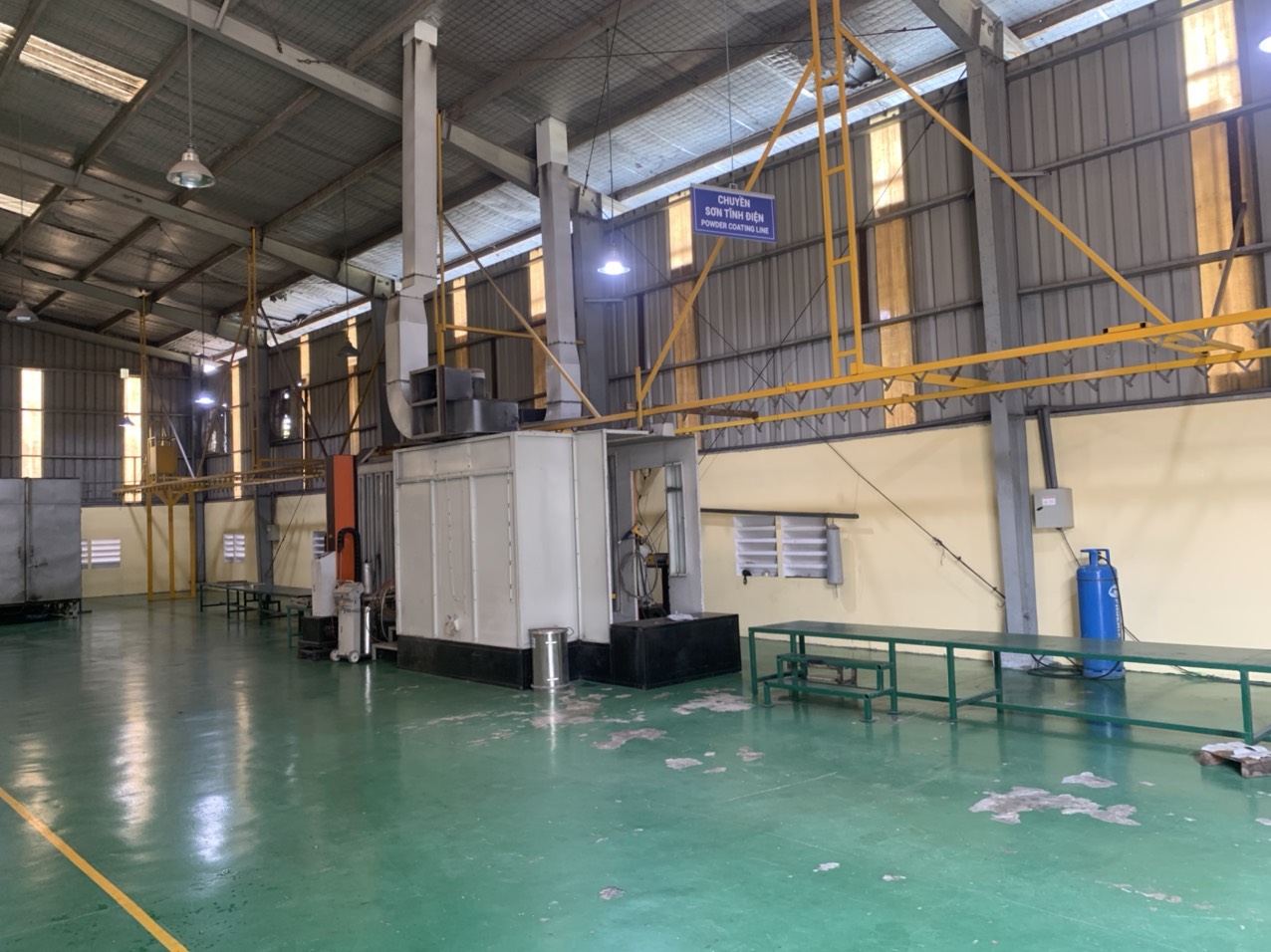
Plating vs. Powder Coating for Corrosion Protection
- Zinc plating: 5–25µm, metallic appearance, maintains dimensional tolerance, conductive
- Powder coating: 50–150µm, wide color options, excellent UV resistance, but adds significant thickness and is non-conductive
- Best practice: Zinc plate + powder coat for ultimate outdoor protection (duplex system). The zinc sacrificially protects any coating damage. Common on outdoor furniture, guardrails, and agricultural equipment
Landed Cost: Plated Parts from Vietnam to US
For a typical steel stamped bracket, zinc plated and passivated (Qty 10,000):
- Part cost (stamped, FOB): $0.45
- Zinc plating (barrel, 12µm + Cr3+ passivation): $0.06
- Packing (bulk box, VCI bag): $0.02
- FOB total: $0.53
- Ocean freight: $0.03/part (light, compact parts)
- US customs duty: 0% for zinc-plated steel parts from Vietnam (HTS 7326.90)
- Landed total: ~$0.58/part
- US domestic equivalent: $1.20–1.80/part (stamped) + $0.25–0.40 (plating) = $1.45–2.20/part
- Savings: 60–74%
Vietnam's Plating Industry: Capacity & Certifications
- Estimated plating shops in Southern Vietnam: 200+ (HCMC, Binh Duong, Dong Nai industrial zones)
- Certifications commonly held: ISO 9001, ISO 14001, IATF 16949 (automotive tier-1 platers), NADCAP (select aerospace platers)
- Wastewater treatment: Vietnamese environmental regulations (Decree 08/2022/NĐ-CP) require all plating shops to treat wastewater to Category A standards. Larger industrial parks have centralized treatment plants
- Electronics sector driver: Samsung, Intel, LG, and Foxconn operations in Vietnam have pulled up plating quality standards. Shops serving these customers operate at world-class levels
- Lead times: Plating alone: 3–7 days for production quantities. Combined machining + plating: 15–25 days total
Common Mistakes in Plating Sourcing
- Not specifying hydrogen embrittlement baking: This is the most dangerous plating defect. If your parts are hardened steel (spring steel, heat-treated fasteners, >HRC 31), you MUST specify post-plate baking per ASTM B850. Failure causes delayed brittle fracture — sometimes weeks after installation.
- Using hex chrome specs on a RoHS product: Legacy drawings may reference Type II (yellow hex chromate) passivation. Update to trivalent chromate — it provides equal or better salt spray performance and meets RoHS/REACH requirements.
- Not defining significant surfaces: If every surface is "significant," the plater must guarantee full thickness everywhere — including deep recesses where current density is low. This dramatically increases cost. Mark your drawing.
- Barrel plating parts that shouldn't be: Parts with polished surfaces, thin walls (<0.5mm), protruding features, or tight flatness requirements will get damaged in barrel plating. The tumbling action creates dings and deformation.
- Not requesting plating thickness reports: Always require XRF measurement reports with each shipment. Specify measurement locations on your drawing. A plater who won't provide thickness data is a plater you shouldn't use.
Get an Electroplating & Surface Finishing Quote
Send us your drawings with plating specifications and we'll match you with Vietnam plating houses that meet your quality requirements. We verify certifications, inspect first articles, and handle logistics.
Request a Quote →