Design for Manufacturability (DFM): A Complete Guide
February 13, 2026 · 10 min read
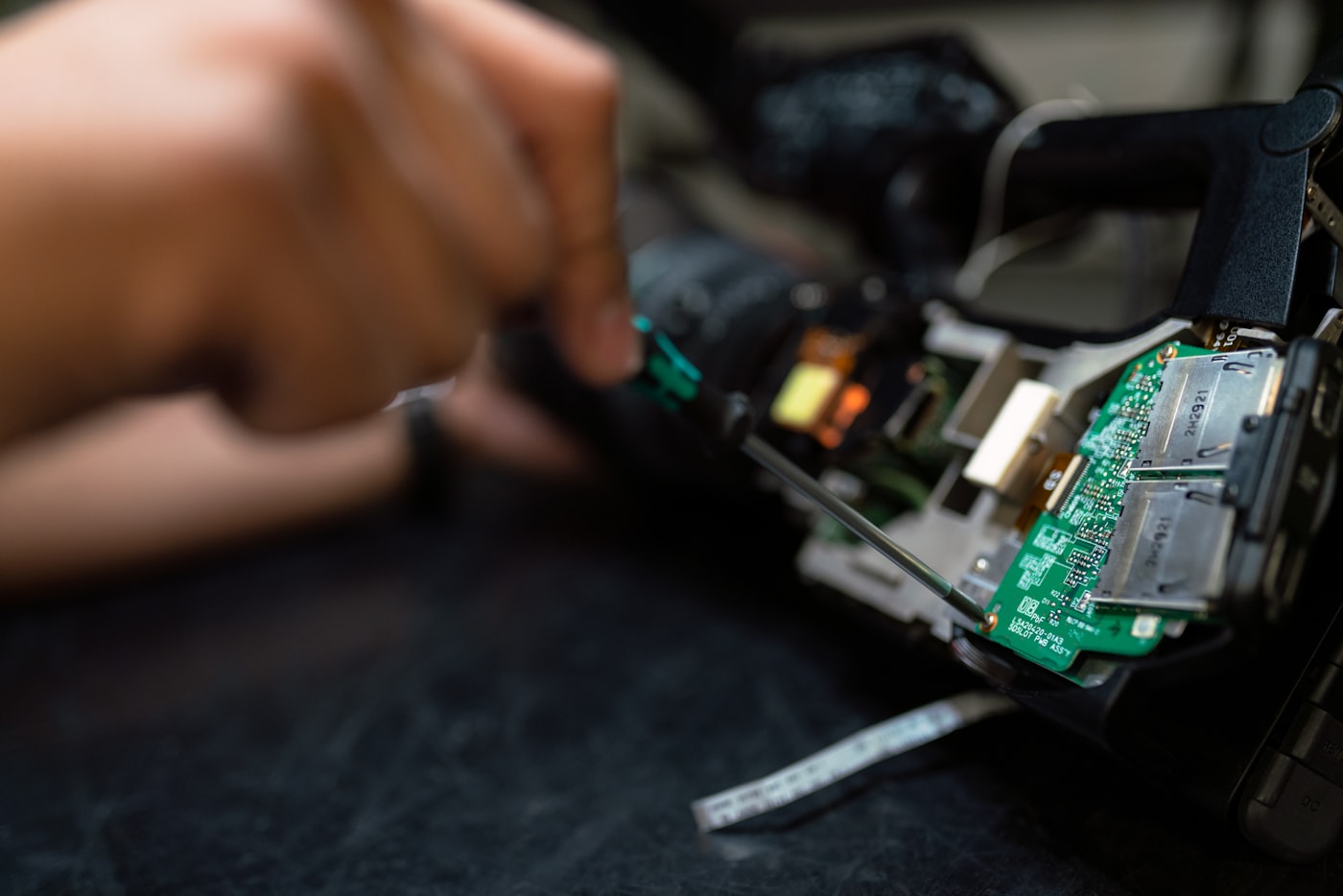
Design for Manufacturability — commonly shortened to DFM — is the practice of designing parts and products so they are easy, efficient, and cost-effective to manufacture. It sounds obvious, but it is one of the most overlooked steps in product development. Engineers focus on function and performance, then hand off drawings to a factory that discovers the geometry is impossible to mold, the tolerances are unnecessarily tight, or the assembly sequence requires five extra fixtures. DFM bridges that gap.
Why DFM Matters More Than Ever
Global supply chains are under constant pressure — tariffs shift, raw material prices fluctuate, and lead times stretch. In this environment, a part designed with DFM principles can be the difference between a profitable product and a money-losing one. According to industry estimates, 70–80% of a product's manufacturing cost is determined at the design stage. Changing a wall thickness in CAD takes minutes. Changing it after tooling is cut takes weeks and thousands of dollars.
At Dewin, our engineering team in Vietnam reviews every project through a DFM lens before production begins. This upfront analysis has saved clients anywhere from 15% to 40% on unit costs — often by making changes that took less than a day of engineering time.
Core DFM Principles
1. Simplify Part Geometry
Every undercut, side action, or complex contour adds tool complexity and cost. Before finalizing a design, ask: does this feature serve a functional purpose, or is it aesthetic? If aesthetic, can the same visual effect be achieved with a simpler form? Reducing the number of side actions in an injection mold from three to one can cut tooling cost by 25–30%.
2. Maintain Uniform Wall Thickness
Non-uniform walls cause uneven cooling in molding, warping in casting, and stress concentrations in machined parts. For injection molding, keep wall thickness between 1.5 mm and 3.5 mm for most thermoplastics. Transitions between thick and thin sections should be gradual — use a taper ratio of 3:1 or gentler to avoid sink marks and voids.
3. Add Appropriate Draft Angles
Parts that are molded or cast need draft — a slight taper on vertical walls — to release from the tool without damage. A minimum of 1° per side is standard for most plastics; 2–3° is safer for textured surfaces. Die-cast parts typically need 1–3° depending on depth. Skipping draft leads to stuck parts, surface scuffing, and premature mold wear.
4. Specify Only Necessary Tolerances
Tight tolerances drive up cost exponentially. A ±0.1 mm tolerance might require standard machining. Tighten that to ±0.02 mm and you may need grinding or EDM — at 3–5× the cost. Identify the critical dimensions that affect fit and function, tolerance those tightly, and leave everything else at standard manufacturing tolerance.
5. Design for Assembly (DFA)
DFM and DFA go hand in hand. Reducing part count simplifies both manufacturing and assembly. Snap fits can replace screws. Self-locating features eliminate the need for jigs. Symmetrical parts reduce orientation errors on the assembly line. Every part you eliminate is a part you don't have to source, inspect, stock, or assemble.
6. Choose Materials Strategically
The right material balances performance, processability, and cost. A part designed for 316 stainless steel may perform identically in 304 — at 20% less material cost. An engineering plastic like PA66-GF30 might replace a machined aluminum component at a fraction of the weight and cost. Work with your manufacturer early to evaluate material alternatives.

DFM by Process: What to Watch For
| Process | Key DFM Considerations |
|---|---|
| Injection Molding | Uniform walls, draft angles, gate location, sink marks, weld lines |
| Die Casting | Draft, parting line, porosity control, minimum wall thickness |
| CNC Machining | Tool access, internal corner radii, depth-to-width ratios, fixturing |
| Sheet Metal | Bend radii, hole-to-bend spacing, flat pattern nesting, grain direction |
| Powder Metallurgy | Compaction direction, uniform density, feature orientation, sintering shrinkage |
The Vietnam DFM Advantage
One of the underappreciated benefits of manufacturing in Vietnam is the engineering support that comes with it. Unlike pure-play brokers who simply relay drawings to factories, Dewin's in-house engineering team conducts a thorough DFM review on every project. We identify potential manufacturing issues, propose design modifications, and provide cost-impact analysis — before any tooling is ordered.
This collaborative approach works because our engineers sit in the same facility as our production teams. They know the exact capabilities of our CNC machines, press brakes, and molding presses. That proximity translates into DFM feedback that is specific and actionable, not generic.
Common DFM Mistakes We See
- Over-tolerancing every dimension — adds cost without adding value
- Ignoring draft on molded or cast parts — causes ejection damage and tool wear
- Designing thin, tall ribs without taper — fills poorly and warps
- Specifying exotic materials when standard alloys suffice — inflates cost and lead time
- Not considering secondary operations — a part that machines beautifully but can't be plated or anodized affordably
How to Get Started with DFM
The best time to apply DFM is at the concept stage, but it's never too late. Even products already in production can benefit from a DFM review — we've helped clients reduce per-unit costs on mature products by revisiting tooling, material choices, and assembly sequences.
Send us your drawings or 3D models and our team will provide a complimentary DFM analysis. We'll flag potential issues, suggest alternatives, and give you a clear picture of how design changes impact cost and lead time.
Ready to optimize your design for manufacturing?
Contact Dewin Vietnam for a free DFM review of your next project.