Custom Weldment & Welded Assembly Manufacturing in Vietnam: 2026 Guide
March 4, 2026 · 16 min read
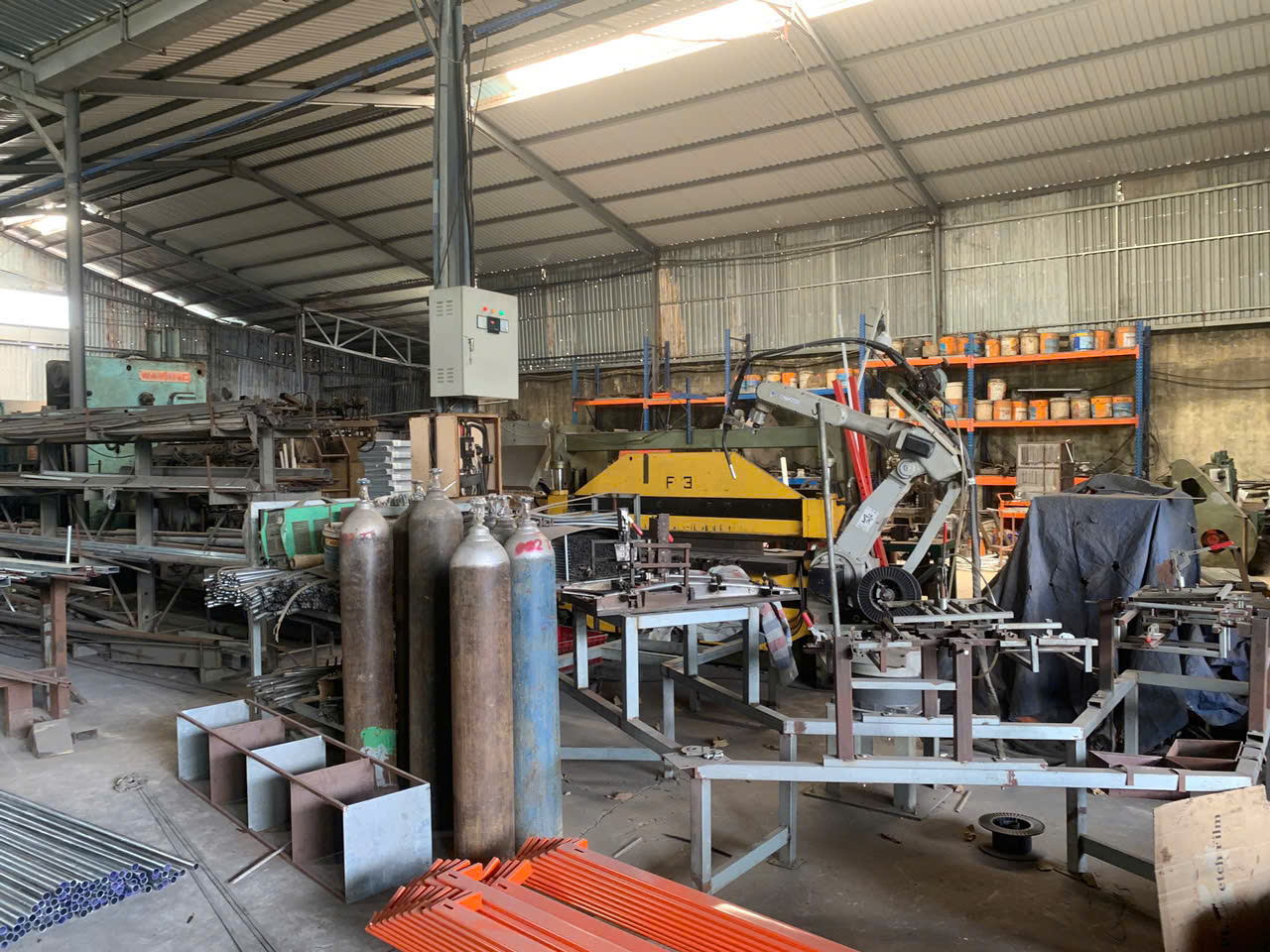
Welded assemblies — frames, chassis, brackets, enclosures, structural supports — are among the highest-value parts US companies outsource. A single weldment can range from $200 to $50,000+ depending on size and complexity, making the 45–60% cost savings available from Vietnam fabricators enormously impactful. Yet weldments are also the category where quality failures are most consequential: a bad weld on a structural frame isn't a cosmetic issue — it's a liability.
This guide covers what US procurement teams need to know about sourcing custom welded assemblies from Vietnam: process capabilities, cost benchmarks with real data, welding standards compliance, and how to specify weldments in your RFQs to get accurate quotes and reliable parts.
Welding Process Capabilities in Vietnam
Vietnam's fabrication sector has invested heavily in welding infrastructure over the past five years, driven by demand from Japanese, Korean, and increasingly American OEMs. Here's what's available:
MIG/MAG Welding (GMAW) — The Workhorse
- Process: Gas Metal Arc Welding using CO₂ or Ar/CO₂ (typically 80/20 mix) shielding
- Best for: Mild steel and low-alloy steel weldments — frames, chassis, structural assemblies
- Deposition rate: 3–8 kg/hr depending on wire diameter (0.8–1.6mm) and amperage
- Material thickness: 1.5mm–50mm+ in single or multi-pass configurations
- Vietnam availability: Universal — every fabrication shop has MIG capability. Many now run Lincoln Electric, Miller, or Fronius power sources
- Cost per linear meter: $1.50–4.00 for mild steel (vs. $6–12 at US shops)
TIG Welding (GTAW) — Precision & Appearance
- Process: Gas Tungsten Arc Welding with pure argon shielding, manual filler rod
- Best for: Stainless steel, aluminum, thin-wall assemblies, visible welds requiring cosmetic finish
- Deposition rate: 0.5–1.5 kg/hr — significantly slower than MIG, reflected in higher cost per joint
- Typical applications: Food processing equipment (SS304/316L), architectural metalwork, pressure vessels, exhaust systems
- Quality note: TIG produces the cleanest welds with minimal spatter, critical for pharmaceutical and food-grade assemblies requiring passivation
- Cost per linear meter: $4.00–10.00 for stainless steel (vs. $15–30 at US shops)
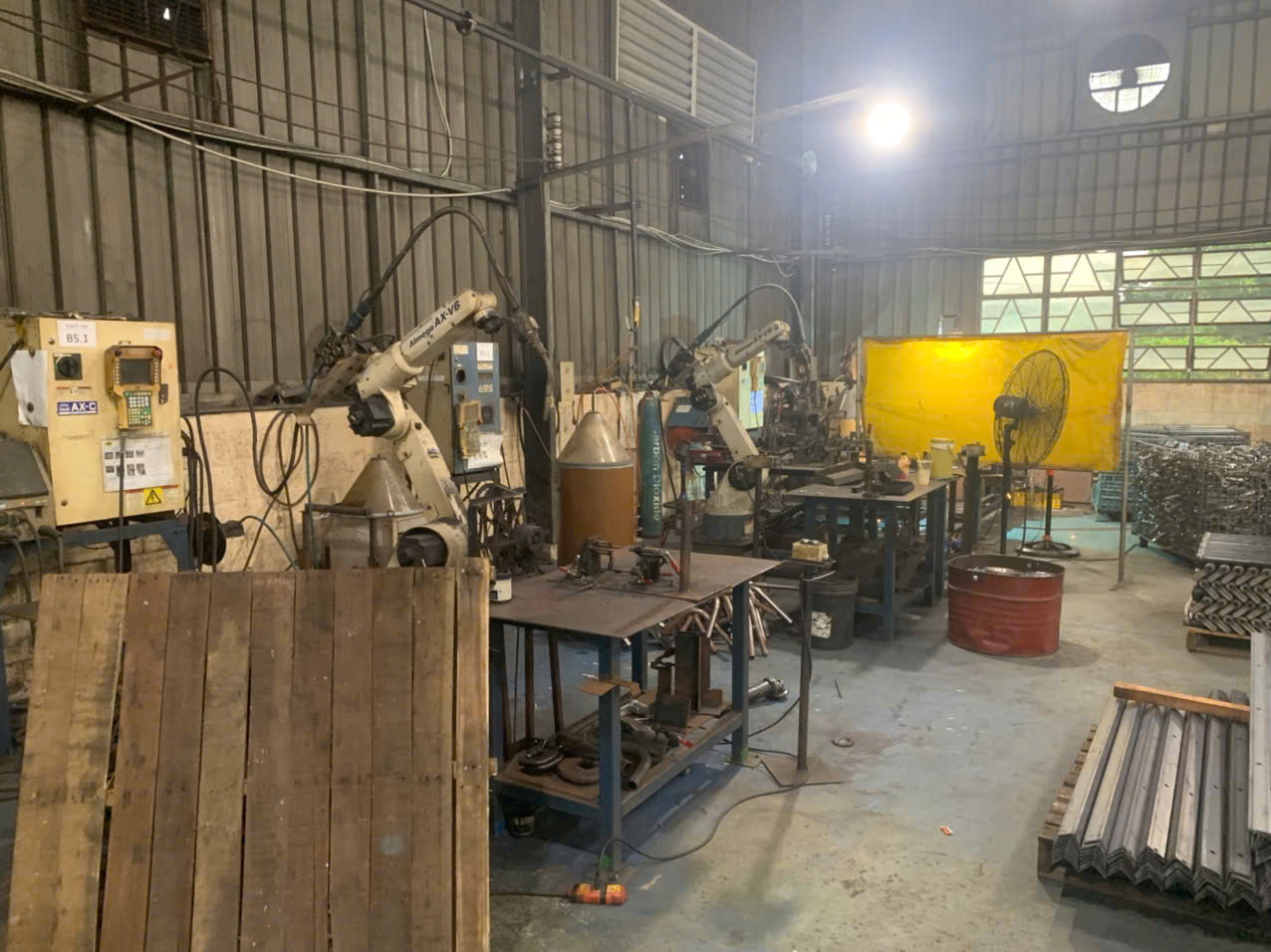
Robotic Welding — Volume & Consistency
- Equipment: Fanuc, Yaskawa Motoman, and OTC Daihen robots (6-axis articulated arms with 1,400–2,000mm reach)
- Best for: Repeat weldments at volumes of 200+ units/year — automotive brackets, furniture frames, repetitive structural components
- Cycle time advantage: 2–4× faster than manual welding with ±0.5mm positional repeatability
- Cost impact: Robotic welding reduces cost per weld 30–50% vs. manual at volumes above 500 units, but fixture/jig tooling adds $2,000–15,000 upfront
- Vietnam availability: Growing — approximately 15–20% of Vietnam's top-tier fabricators now have robotic welding cells, up from <5% in 2020
Spot Welding (RSW) — Sheet Metal Assemblies
- Process: Resistance Spot Welding — two electrodes clamp and fuse overlapping sheets
- Best for: Sheet metal enclosures, automotive body panels, HVAC assemblies — anywhere two flat sheets overlap
- Material range: 0.5mm–3.0mm per sheet (total stack ≤6mm), mild steel, galvanized steel, stainless
- Cycle time: 0.5–2 seconds per spot — extremely fast for production volumes
- Cost per spot: $0.02–0.08 in Vietnam (vs. $0.08–0.25 in US)
Submerged Arc Welding (SAW) — Heavy Plate
- Best for: Thick-section structural steel (12mm–100mm+), pressure vessels, heavy equipment frames, pipe fabrication
- Deposition rate: 10–20 kg/hr — the fastest deposition of any arc welding process
- Quality: Deep penetration, no spatter, smooth bead — ideal for code-welded structural work
- Vietnam availability: Available at heavy fabrication shops, particularly those serving shipbuilding and construction equipment sectors
Cost Comparison: Vietnam vs. US vs. China Weldments
Welded assembly cost is driven by three factors: material (25–40%), labor/welding time (35–50%), and finishing/assembly (15–25%). Vietnam's advantage comes primarily from labor — a certified AWS welder in the US earns $25–45/hr; a comparably skilled welder in Vietnam earns $3.50–6.00/hr.
Benchmark: Mild Steel Structural Frame (1200×600×400mm)
- Specification: S235JR / A36 equivalent, 50×50×3mm square tube, 12 joints, MIG welded, powder coated
- US domestic quote (2026): $380–520 per unit at 100 units
- China quote (before tariff): $145–195 per unit + 25% Section 301 tariff = $181–244 landed
- Vietnam quote: $130–175 per unit + 0% tariff (steel products) = $130–175 landed
- Add ocean freight: ~$8–15/unit (shared container, 100 units) → Vietnam landed total: $138–190
- Savings vs US: 55–65% | Savings vs China (with tariffs): 15–25%
Benchmark: Stainless Steel Equipment Frame (SS304, TIG Welded)
- Specification: 1500×800×1000mm, 40×40×2mm SS304 tube + 3mm plate brackets, full TIG, passivated
- US domestic: $1,200–1,800 per unit at 50 units
- Vietnam: $480–720 per unit landed (including freight) — 55–60% savings
- Why the gap is wider on stainless: TIG welding is 3–5× slower than MIG, so labor cost dominates. Vietnam's labor advantage amplifies with labor-intensive processes
Benchmark: Aluminum Weldment (6061-T6, TIG)
- Key challenge: Aluminum welding reduces T6 temper to T0 in the heat-affected zone (HAZ), dropping yield strength from 276 MPa to ~55 MPa
- Solution: Post-weld T6 heat treatment ($2–5/kg) or design for reduced strength in HAZ zones
- Vietnam vs US: 40–55% savings, slightly less than steel because aluminum wire and argon shielding gas costs are similar globally
Welding Standards & Certifications in Vietnam
For weldments destined for the US market, standards compliance is non-negotiable. Here's what Vietnam fabricators can and should certify to:
AWS D1.1 — Structural Welding (Steel)
- The primary standard for steel structural weldments in the US
- Requires qualified Welding Procedure Specifications (WPS) and welder qualification per AWS D1.1 Clause 4 & 6
- Vietnam status: Top-tier fabricators maintain AWS D1.1 qualified procedures. Request WPS and PQR (Procedure Qualification Records) during supplier evaluation
- Welder qualification test: 3G (vertical) and 4G (overhead) positions are standard qualifications — verify welders are certified for the positions your weldment requires
ISO 3834 — Quality Requirements for Fusion Welding
- Three levels: ISO 3834-2 (Comprehensive), 3834-3 (Standard), 3834-4 (Elementary)
- Covers quality management of welding operations — equipment calibration, consumable storage, welder training, traceability
- Why it matters: ISO 3834-2 is the European equivalent of comprehensive welding quality systems. Fabricators with this cert typically have better process control than those with only ISO 9001
ASME Section IX — Pressure Vessels & Piping
- Required for any weldment that contains or carries pressurized fluids
- Mandates qualified WPS, welder performance qualifications (WPQ), and NDE (Non-Destructive Examination)
- Vietnam capability: Several Vietnam fabricators hold ASME U-stamp and S-stamp certifications, primarily those serving oil/gas and process equipment markets
How to Specify Weldments in Your RFQ
Incomplete weldment specs are the #1 cause of bad quotes and quality disputes. Include these in every weldment RFQ:
Critical RFQ Elements
- 3D model + 2D drawing: STEP or IGES for 3D, PDF drawing with weld symbols per AWS A2.4. If you don't use weld symbols, at minimum specify: joint type, weld size (throat/leg), and weld length
- Base material grade: Don't just say "steel" — specify A36, S235JR, SS304L, AL6061-T6, etc.
- Welding process requirement: If your application demands TIG for stainless (e.g., food-grade), state it. Otherwise, let the supplier choose the most economical process
- Weld quality level: Reference the acceptance criteria — AWS D1.1 Table 6.1 for structural, ISO 5817 Level B/C/D for general fabrication
- Dimensional tolerances: Overall assembly tolerance (typically ±1.0–2.0mm for general fabrication, ±0.5mm for precision frames). Specify critical dimensions vs. general
- Surface treatment: Powder coating (specify RAL color, thickness 60–80μm), hot-dip galvanizing (per ASTM A123, 45–85μm), or painting (primer + topcoat system)
- Inspection requirements: Visual inspection (100%), dimensional inspection (CMM or fixtures), NDE if applicable (UT, MT, PT — specify which and percentage of joints)
- Annual volume & release schedule: A 1,000-unit/year order with monthly releases quotes very differently from a one-time 50-unit order
Common Specification Mistakes
- Over-specifying weld quality: Requiring AWS D1.1 Class A (cyclically loaded) when your frame is a static support structure adds 15–25% inspection cost for zero benefit
- Missing distortion control: Large weldments distort. If flatness matters, specify it. Stress relieving adds $1–3/kg but eliminates post-weld warpage
- Ignoring weld access: Design joints the welder (or robot) can physically reach. Internal corners with <30° included angle are common DFM failures
- Not specifying fit-up tolerance: Gap between mating parts before welding — typically 0–2mm for MIG, 0–1mm for TIG. Excessive gaps require more filler, increasing cost and distortion risk
Material Availability for Weldments in Vietnam
Carbon & Structural Steel
- Grades: SS400/A36/S235JR (interchangeable for most structural applications), S355J2, ASTM A572 Gr.50
- Forms: Plate (3–100mm), tube (square 20×20 to 200×200mm, round 21.3–406mm OD), angle, channel, I-beam — all readily available
- Sources: Hoa Phat (Vietnam's largest steelmaker, 8.5M tonnes/yr capacity), Formosa Ha Tinh, POSCO Vietnam, imported from JFE/Nippon Steel for specialty grades
- Material cost (2026): A36 plate: $680–780/tonne | Square tube: $750–850/tonne | SS400 hot-rolled coil: $620–700/tonne
Stainless Steel
- Grades: SS304/304L (most common), SS316/316L, SS201 (cost-optimized for non-corrosive applications)
- Forms: Sheet/plate, tube (round and square), bar — imported primarily from POSCO (Korea) and Tsingshan (China/Indonesia)
- Material cost (2026): SS304 2B sheet: $2,400–2,800/tonne | SS316L: $3,500–4,200/tonne
- Lead time note: Common grades available from local distributors in 3–5 days. Specialty grades (duplex 2205, 904L) require 4–6 week import lead time
Aluminum
- Weldable grades: 6061-T6, 5052-H32, 5083-H116 (marine), 6063-T5 (extrusions)
- Sources: Imported from Novelis, Aleris, or Chinese mills — limited domestic aluminum production in Vietnam
- Key consideration: Aluminum welding requires AC TIG or pulsed MIG capability — verify your Vietnam supplier has the right equipment and qualified welders (AWS D1.2)
Quality Control for Weldments
Welded assembly QC goes beyond dimensional checks. Here's the inspection protocol we implement at DEWIN Vietnam:
Pre-Production
- Review and approve WPS (Welding Procedure Specification) — verify it matches your material, thickness, and joint type
- Verify welder qualifications — check certification dates, positions qualified (1G–6G), and process qualifications
- First Article Inspection (FAI) — full dimensional report on the first 1–3 units before production release
- Fixture/jig validation — confirm holding forces, locating surfaces, and repeatability
In-Process Inspection
- Visual (VT): 100% inspection per AWS D1.1 Clause 6.9 — check for undercut (<1mm acceptable for static loads), porosity, incomplete fusion, cracks (zero tolerance)
- Dimensional: Key dimensions checked per 10–20 units or per batch. Use go/no-go gauges for mating interfaces
- Weld sizing: Fillet weld gauges to verify leg length and throat dimension at each joint type
Non-Destructive Examination (NDE)
- Magnetic Particle Testing (MT): For ferromagnetic materials — detects surface and near-surface cracks. Cost: $5–15 per joint
- Liquid Penetrant Testing (PT): For stainless steel, aluminum, non-magnetic materials — detects surface-breaking defects. Cost: $3–10 per joint
- Ultrasonic Testing (UT): For full-penetration butt welds — detects internal defects. Cost: $15–40 per joint. Required for structural code work
- Radiographic Testing (RT): X-ray inspection for critical joints — highest sensitivity but also highest cost ($30–80 per joint) and requires radiation safety protocols
- When to specify NDE: Always for pressure-containing and cyclically loaded weldments. For static structural frames, visual + dimensional is typically sufficient — adding NDE adds 5–15% to part cost
Tariff & Trade Advantages
- Section 301 tariffs on China: Steel fabricated products from China face 25% tariff (List 1, HTS 7308). Vietnam-origin fabricated steel: 0% Section 301
- Section 232 steel tariff: Vietnam steel products may be subject to 25% Section 232 tariff on raw steel material, but fabricated assemblies classified under HTS 7308.90 (other structures) are typically exempt — consult your customs broker for your specific HTS code
- CPTPP benefit: For companies re-exporting from Vietnam to other CPTPP members (Japan, Australia, Canada, Mexico), preferential tariff rates apply
- Anti-dumping: Vietnam steel is not currently subject to AD/CVD duties in most fabricated product categories, unlike China where AD margins reach 100%+ on some steel products
When to Source Weldments from Vietnam (and When Not To)
Vietnam Makes Sense When:
- Annual volumes exceed 50 units (to amortize fixture tooling and logistics overhead)
- Assemblies are labor-intensive — multi-joint, stainless TIG, complex geometries where labor cost dominates
- Lead time can accommodate 6–10 weeks (4–6 weeks production + 2–4 weeks ocean freight)
- Parts don't require ITAR or defense-related manufacturing restrictions
- You need a China+1 alternative with tariff advantages
Keep It Domestic When:
- Prototypes or volumes under 10–20 units — logistics overhead eliminates cost advantage
- Assemblies exceed shipping container dimensions (40' HC: 12m × 2.35m × 2.69m internal) and require expensive flat-rack or break-bulk shipping
- Lead time is under 4 weeks
- Buy American Act (BAA) or Berry Amendment compliance is required
- Weldments require on-site fit-up with customer's existing equipment
Get a Quote for Custom Weldments
DEWIN Vietnam connects US buyers with vetted Vietnam fabricators specializing in welded assemblies. Our quality engineers review every WPS, inspect in-process, and manage logistics door-to-door. Upload your drawings and get a quote within 48 hours.