Vietnam CNC Machining Tolerances: What US Engineers Need to Know
February 14, 2026 · 14 min read
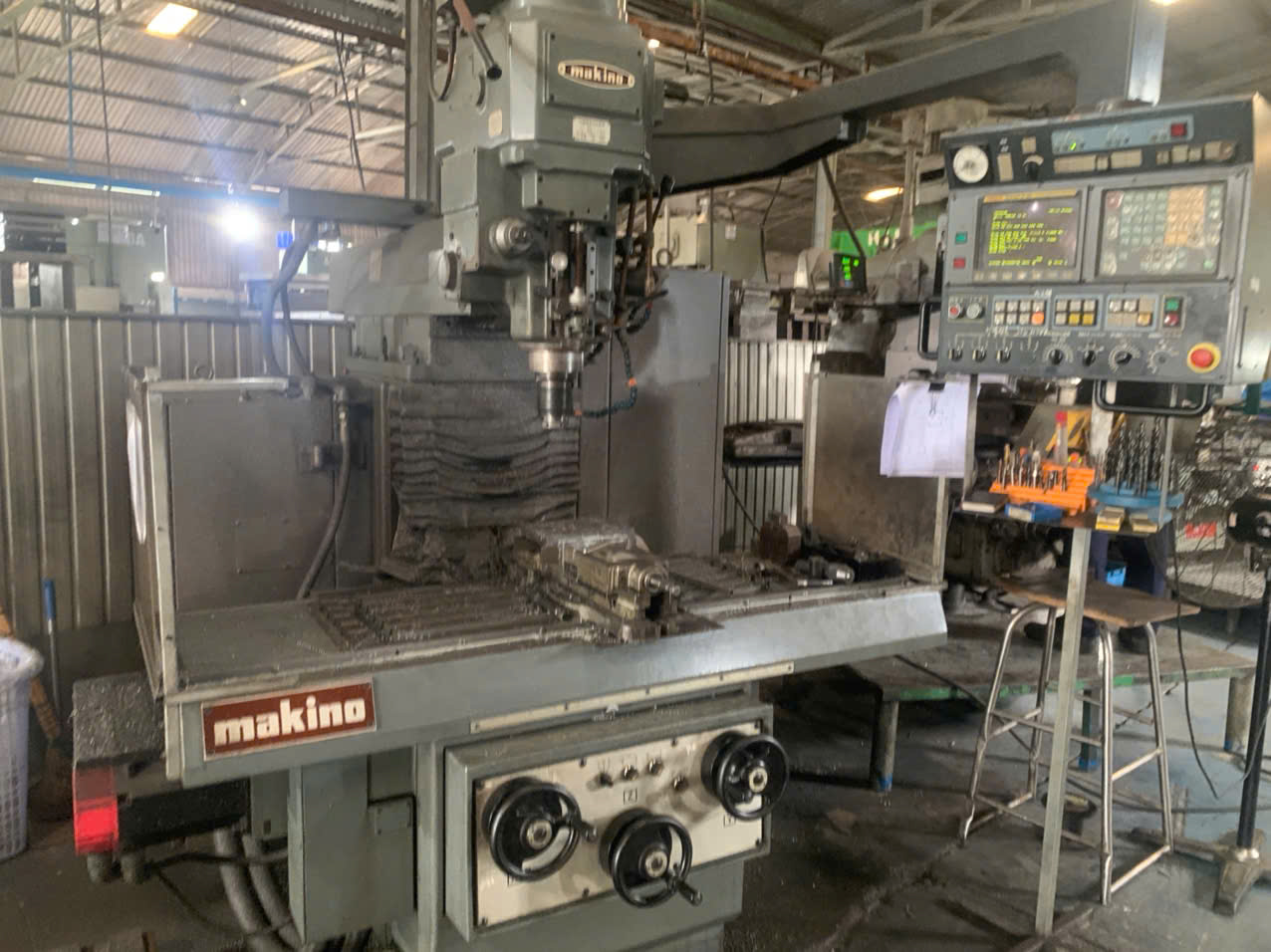
"Can Vietnam hold ±0.01mm?" It's the first question US engineers ask when considering offshore CNC machining. The short answer: yes, many Vietnamese shops routinely hold ±0.005mm on critical features — but only if you specify correctly and choose the right supplier. This guide covers achievable tolerances by process, material-specific considerations, how to write tolerance callouts that prevent misinterpretation, and the cost impact of tighter specs.
Standard vs. Precision Tolerances in Vietnam
| Process | Standard Tolerance | Precision Tolerance | Surface Finish (Ra) |
|---|---|---|---|
| CNC Milling (3-axis) | ±0.05mm | ±0.01mm | Ra 1.6–3.2μm |
| CNC Milling (5-axis) | ±0.025mm | ±0.005mm | Ra 0.8–1.6μm |
| CNC Turning | ±0.025mm | ±0.005mm | Ra 0.8–1.6μm |
| CNC Turning (Swiss-type) | ±0.01mm | ±0.003mm | Ra 0.4–0.8μm |
| Wire EDM | ±0.01mm | ±0.002mm | Ra 0.2–0.8μm |
| Cylindrical Grinding | ±0.005mm | ±0.001mm | Ra 0.1–0.4μm |
These tolerances are achievable at production volumes. Prototype tolerances may be tighter due to individual attention per part.
Material-Specific Tolerance Guidance
Aluminum 6061-T6
The workhorse of CNC machining. Excellent machinability (rating: 90% of free-cutting brass). Vietnam shops routinely hold ±0.01mm on milled features. Key considerations:
- Thermal expansion coefficient: 23.6 μm/m·°C — parts expand ~0.024mm per 100mm in a 10°C temperature swing. Specify inspection temperature (20°C ±2°C per ISO 1).
- Residual stress from T6 temper can cause warpage on thin-wall parts (<2mm). Request stress-relief heat treatment before final machining for flatness <0.05mm over 200mm.
- Anodizing adds 0.02–0.025mm per surface (Type II) or 0.025–0.05mm (Type III hard coat). Account for this in your tolerance stack.
- Cost in Vietnam: $15–$40/hour machine time (vs. $75–$150/hour US). Simple bracket in AL6061-T6: $3–$8/pc at 500 qty from Vietnam, $15–$30/pc US.
Stainless Steel 304 / 316L
Work hardening is the main challenge. SS304 work hardens rapidly — cutting at the wrong feed rate creates a hardened layer that destroys subsequent cuts. Vietnam shops with experience use:
- Climb milling with constant chip load (0.05–0.10mm/tooth for finishing)
- Carbide inserts with TiAlN coating, cutting speed 80–120 m/min
- Flood coolant (not mist) — critical for maintaining tolerance on long runs
- Achievable tolerance: ±0.015mm on 3-axis, ±0.008mm on 5-axis for features under 100mm
- 316L note: 10–15% harder to machine than 304. Budget 20% more cycle time. Required for marine, medical (ASTM F138), and food-contact applications.
Brass C360 (Free-Cutting)
The easiest metal to machine — machinability rating 100% (the benchmark). Vietnam Swiss-type turning shops produce high-precision brass connectors, valve bodies, and fittings at ±0.005mm with Ra 0.4μm. Ideal for electrical contacts (conductivity: 26% IACS) and plumbing components. At volumes >10K, expect $0.50–$3.00/pc for small turned parts.
Titanium Grade 5 (Ti-6Al-4V)
Demanding but achievable. Vietnamese aerospace-tier shops (growing sector) machine Ti-6Al-4V at low cutting speeds (30–60 m/min), sharp positive-rake tools, and aggressive coolant delivery. Tolerances: ±0.02mm standard, ±0.01mm precision. Price premium: 2–3× aluminum cycle time. Springback during clamping is the hidden enemy — use fixtures with multiple soft-jaw contact points.
How to Specify Tolerances in Your RFQ
Poorly specified drawings are the #1 cause of quality issues in offshore machining. Follow these rules:
- Apply GD&T (ASME Y14.5): Vietnamese shops trained on Japanese/Korean methods read GD&T fluently. Use position tolerances, not bilateral dimensions, for hole patterns. A 6-hole bolt circle at ⌀50mm ±0.05mm position tolerance is unambiguous; "holes at 30° spacing ±0.1mm" is not.
- Identify critical dimensions: Mark CTQ (critical-to-quality) features explicitly. Vietnam shops will allocate CMM inspection time accordingly. Non-critical features should default to ISO 2768-mK (±0.1mm for 6–30mm, ±0.2mm for 30–120mm).
- Specify surface finish per feature: Don't blanket Ra 0.8μm on the entire part — it triples machining time. Callout Ra 0.8 only on sealing and mating surfaces; leave non-functional surfaces at Ra 3.2.
- Include material cert requirements: "Material: AL6061-T6 per AMS-QQ-A-250/11, mill cert required" eliminates ambiguity. For medical/aerospace, add DFARS compliance and material traceability.
- Thread callouts: Specify per ASME B1.1 (UN threads) or ISO 261 (metric). Include class of fit (2A/2B for UN, 6g/6H for metric). Vietnamese shops default to ISO metric — if you need UNC/UNF, call it out explicitly.
The Cost of Tight Tolerances
Every decimal place you add to a tolerance roughly doubles the cost. Here's a practical example — a 50mm aluminum bore:
| Tolerance | Process Required | Relative Cost | Vietnam Price (500 qty) |
|---|---|---|---|
| ±0.1mm | Standard CNC bore | 1× | $0.50/feature |
| ±0.025mm | Fine boring + slow feed | 2× | $1.00/feature |
| ±0.01mm | Precision boring + CMM check | 4× | $2.00/feature |
| ±0.005mm | Honing or jig grinding | 8–10× | $4.00–$5.00/feature |
Even at ±0.005mm, Vietnam pricing remains 60–70% below equivalent US machine shops. The key is specifying tight tolerances only where function demands it — over-tolerancing a non-critical feature wastes money regardless of sourcing location.
Inspection & Quality Assurance
Vietnam's top CNC shops invest heavily in metrology — here's what to look for:
- CMM: Mitutoyo Crysta-Apex or Hexagon Global — accuracy ±0.002mm. Request CMM reports (PPAP Level 3) for all CTQ dimensions.
- Surface profilometer: Mitutoyo SJ-410 or equivalent for Ra/Rz verification.
- Optical comparator / vision system: For 2D profile inspection on small parts.
- First Article Inspection (FAI): Request AS9102 format for aerospace parts. Standard FAI for commercial: full balloon drawing + CMM report on 5 pieces from the first production run.
- SPC during production: Top shops run Cpk analysis on critical features. Request Cpk ≥ 1.33 (4σ) minimum, ≥ 1.67 (5σ) for automotive/aerospace.
Trade & Logistics Context
CNC machined parts from Vietnam enter the US under HTS Chapter 73 (steel) or 76 (aluminum) with standard MFN duty rates — with no Section 301 surcharges — a massive advantage over Chinese equivalents facing 7.5–25% Section 301 tariffs. CPTPP membership further strengthens Vietnam's position against ASEAN competitors. Typical ocean freight: Ho Chi Minh City → Los Angeles in 18–22 days, $0.10–$0.30/kg for FCL shipments.
Need Precision CNC Parts from Vietnam?
DEWIN works with ISO 9001 / IATF 16949 certified CNC shops across Vietnam — from prototype to 100K+ volume production. Request a quote →