Aluminum Extrusion in Vietnam: Alloys, Costs & Sourcing Guide
March 6, 2026 · 16 min read
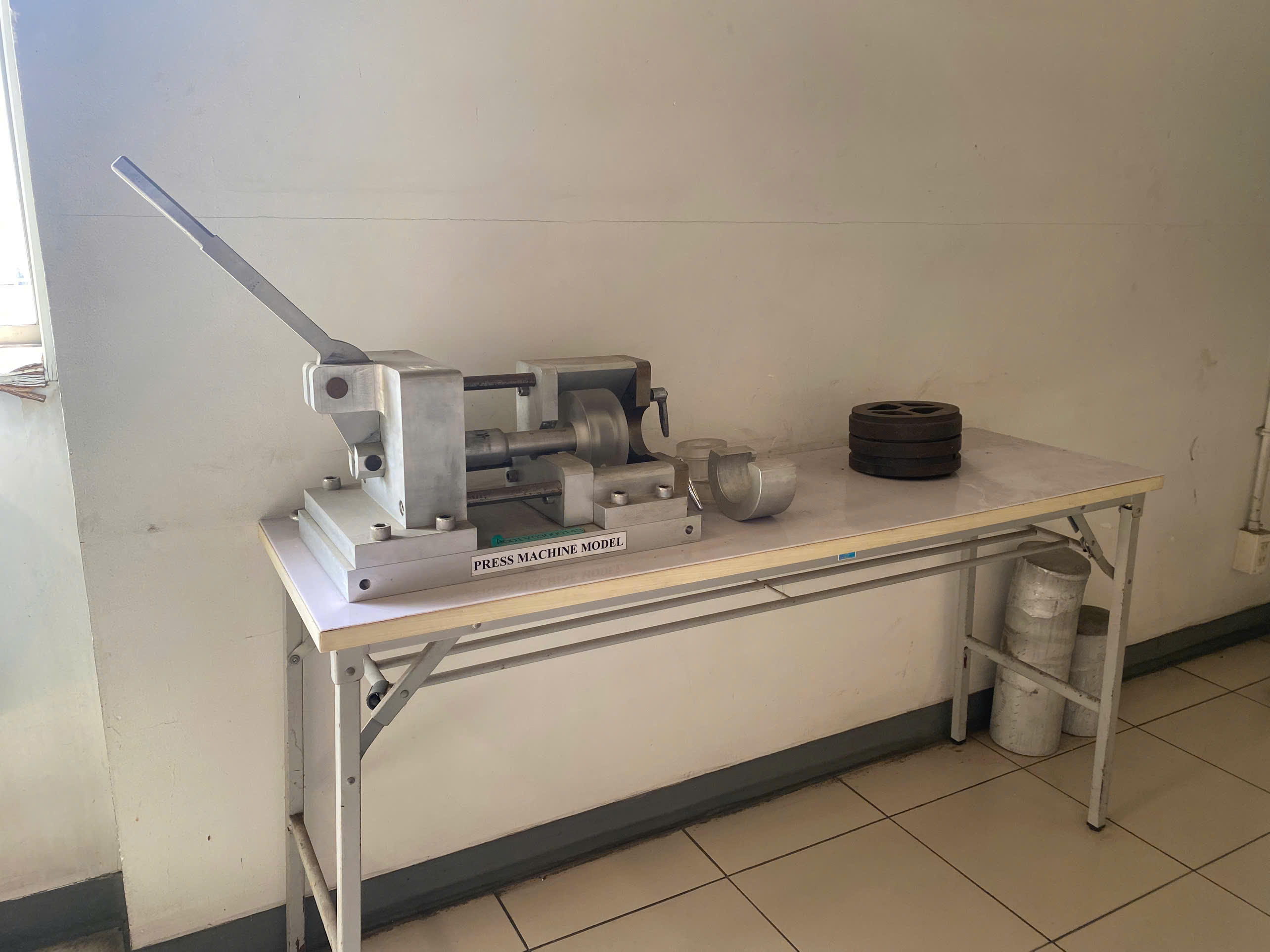
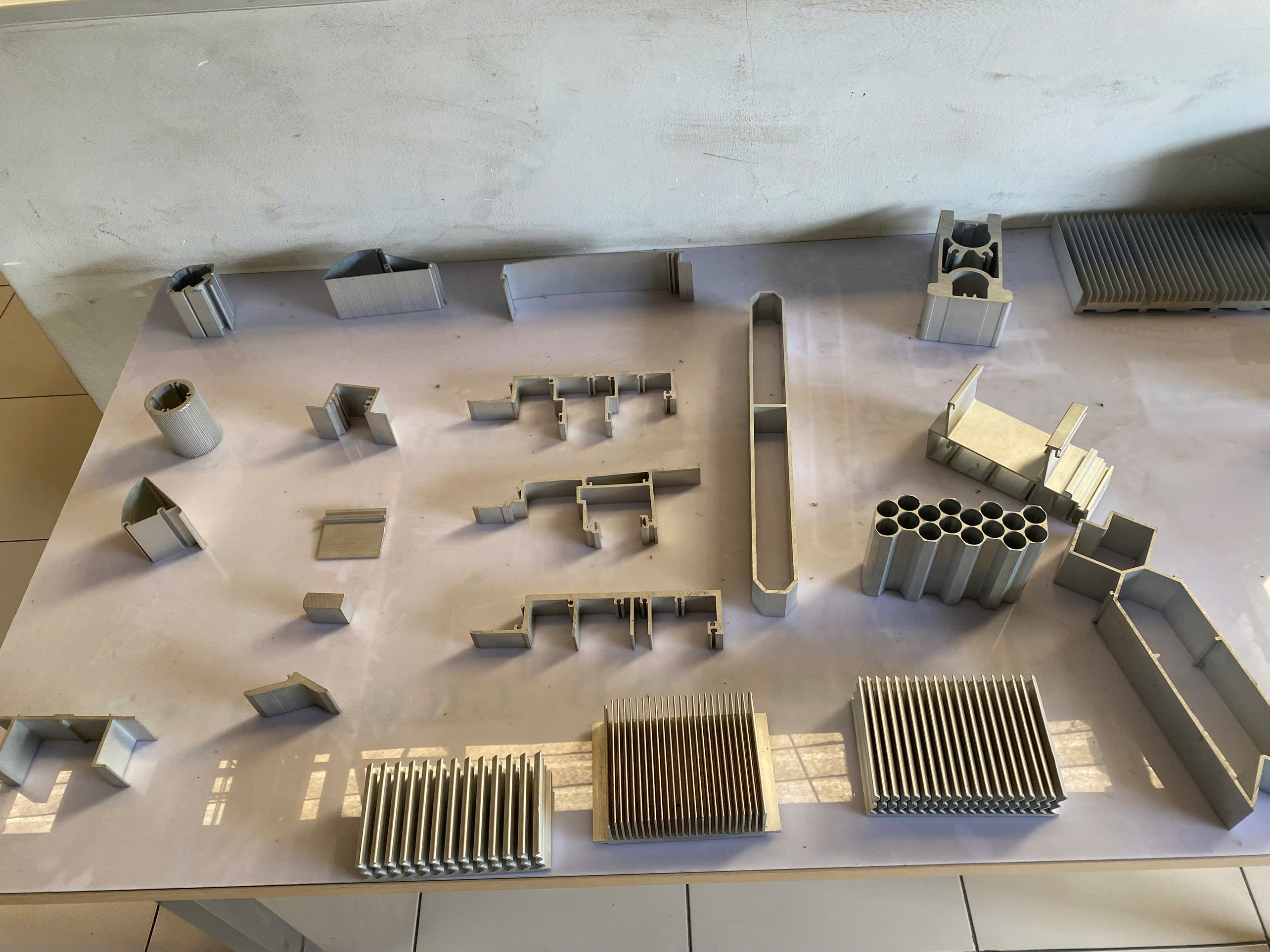
Aluminum extrusion is the most cost-effective way to produce constant cross-section profiles — from structural framing and heat sinks to window systems and enclosure channels. The process forces heated aluminum billet through a steel die at 10,000–15,000 tonnes of pressure, producing profiles up to 25 meters long at rates of 5–80 meters per minute. For US buyers, Vietnam has emerged as a compelling sourcing destination: die tooling costs 50–70% below domestic, per-meter pricing 35–55% lower, and zero Section 301 tariff surcharges.
This guide covers everything procurement managers and engineers need to evaluate Vietnam as an aluminum extrusion source — alloy selection, die economics, pricing benchmarks, surface finishing, and the logistics of getting profiles to your US facility.
Aluminum Alloys for Extrusion: What Vietnam Shops Offer
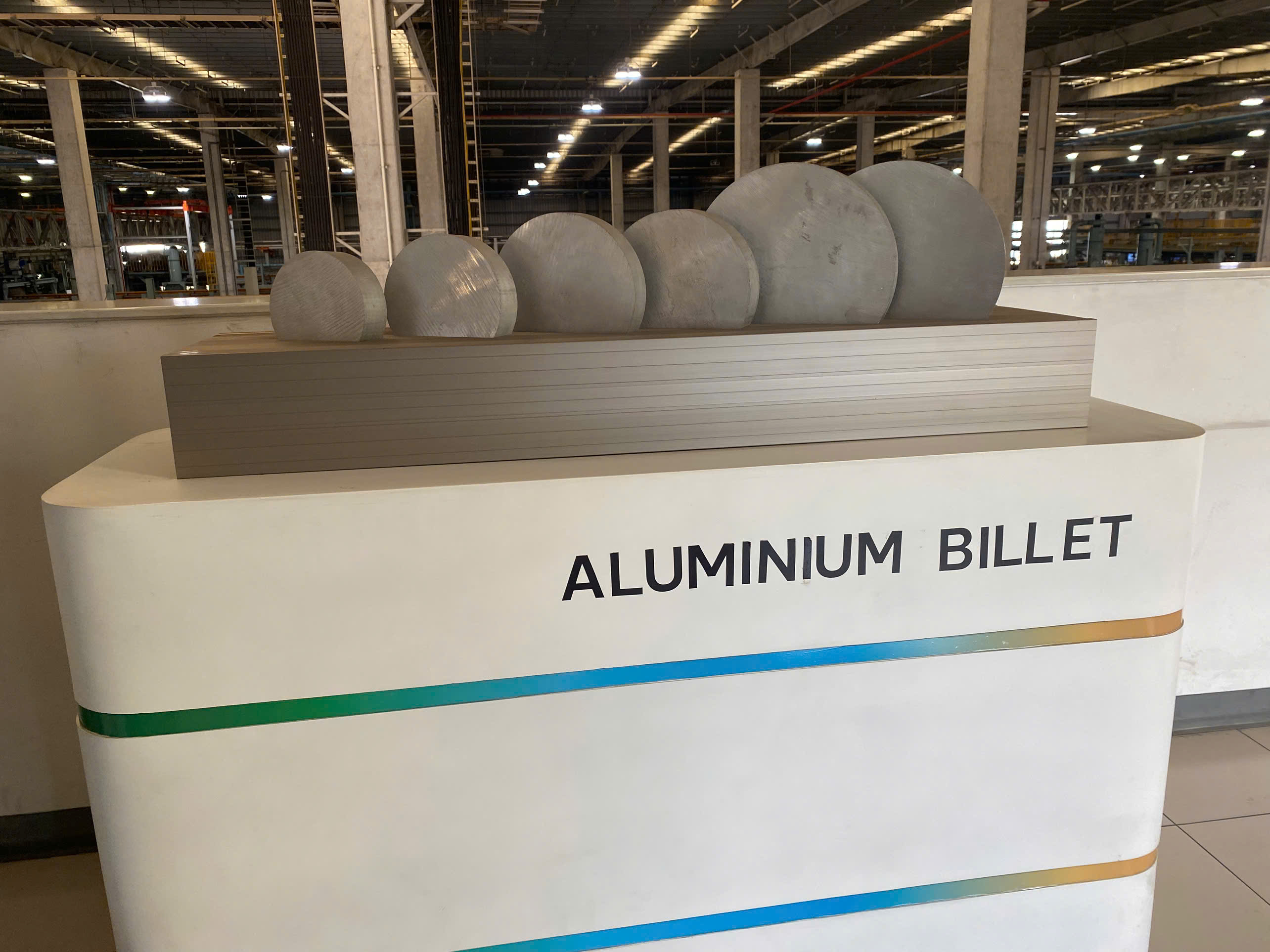
Not all aluminum alloys extrude equally. The key factor is extrudability — a function of flow stress, hot shortness tendency, and surface finish achievability. Vietnam extruders source billet primarily from Alcoa (US), Hydro (Norway), UACJ (Japan), and domestic producers like TBS Group and Tung Kuang.
6063-T5 — The Default Extrusion Alloy (85% of All Profiles)
- Composition: 0.4% Si, 0.7% Mg — the Mg₂Si precipitate gives moderate strength after aging
- Tensile strength: 185 MPa (T5) | Yield: 145 MPa
- Extrudability rating: 100% (baseline) — flows easily, excellent surface finish, tight corner fills
- Surface finish: Excellent — Class 1 anodizing produces uniform, bright appearance
- Typical applications: Architectural frames, window/door systems, T-slot framing, LED heat sinks, trim profiles
- Vietnam billet cost: $2,600–2,900/tonne (March 2026, LME aluminum ~$2,450 + premium)
- When to specify: Any application where aesthetics matter and structural loads are moderate (≤145 MPa yield)
6061-T6 — Structural & Machined Applications
- Composition: 0.6% Si, 1.0% Mg, 0.28% Cu, 0.20% Cr — copper and chromium additions improve strength
- Tensile strength: 310 MPa (T6) | Yield: 275 MPa — 90% stronger than 6063-T5
- Extrudability rating: 60% — needs higher billet temperatures (480–520°C vs. 450–490°C for 6063), slower speeds, larger press capacity
- Surface finish: Good but slightly coarser than 6063. Not ideal for bright anodizing — shows die lines more
- Typical applications: Structural members, truck body framing, drone airframes, robot arms, conveyor rails
- Vietnam billet cost: $2,900–3,300/tonne — ~15% premium over 6063
- Cost impact: 20–35% higher per-meter cost vs. 6063 due to slower extrusion speeds and more die wear
6005A-T6 — The Bridge Between 6063 and 6061
- Tensile strength: 260 MPa | Yield: 215 MPa
- Why it exists: Better extrudability than 6061 (80% rating) with 40% more strength than 6063
- Typical applications: Rail car bodies, solar mounting systems, bridge decking — applications needing moderate strength + good surface finish
- Availability in Vietnam: Major extruders stock it; smaller shops may require MOQ of 2–5 tonnes of billet
7075-T6 — Aerospace Grade (Limited Extrudability)
- Tensile strength: 572 MPa | Yield: 503 MPa — comparable to many steels
- Extrudability rating: 25% — very slow extrusion speeds, limited to simple cross-sections
- Vietnam availability: Only 2–3 extruders handle 7075. Most aerospace extrusions are still CNC machined from bar/plate
- When to extrude 7075: Simple shapes (angles, channels, rectangular tubes) at volumes >1,000 meters justify die investment
- Alternative: Consider 6082-T6 (310 MPa tensile) — extrudes 3× faster and costs 40% less per meter
Die Tooling: The Economics That Drive Extrusion Decisions
Every custom extrusion profile requires a steel die — typically H13 tool steel, heat treated to HRC 46–50, wire-EDM cut with ±0.05mm accuracy. Die cost is the primary barrier to custom extrusion and where Vietnam's advantage is most dramatic.
Die Cost Comparison (2026)
- Solid profile die (simple shape, CCD ≤150mm): Vietnam $300–800 | China $400–1,000 | US $1,500–4,000
- Solid profile die (complex, CCD 150–250mm): Vietnam $600–1,500 | China $800–2,000 | US $3,000–8,000
- Hollow profile die (single void, CCD ≤150mm): Vietnam $800–2,000 | China $1,000–2,500 | US $4,000–10,000
- Hollow profile die (multi-void, CCD 200–350mm): Vietnam $1,500–4,000 | China $2,000–5,000 | US $8,000–20,000
- Semi-hollow die: 30–50% more than equivalent solid die
CCD = Circumscribing Circle Diameter — the smallest circle that encloses the profile cross-section. This is the primary driver of die size and press tonnage required.
Die Life Expectations
- 6063 solid profiles: 80–150 tonnes per die (before dimensional drift requires nitriding or replacement)
- 6061 solid profiles: 40–80 tonnes per die — higher flow stress wears dies faster
- Hollow profiles: 30–60 tonnes — the mandrel/bridge area takes extreme stress
- Nitriding: $80–200 per die treatment, extends life 30–50%. Vietnam extruders typically nitrride every 15–25 tonnes
- Pro tip: At volume >20 tonnes/year, negotiate a spare die upfront. A second die costs 60–70% of the first (design already done, just cutting steel)
Per-Meter Pricing: Vietnam vs. China vs. US Domestic
Extrusion pricing is driven by four factors: alloy cost (tracks LME), extrusion conversion cost (labor + energy + overhead), scrap rate (typically 8–15%), and profile complexity.
Standard Profiles (6063-T5, CCD ≤100mm, weight ~0.8 kg/m)
- Qty 500 meters: Vietnam $3.20–4.50/m | China $3.50–5.00/m | US $7.50–12.00/m
- Qty 2,000 meters: Vietnam $2.60–3.80/m | China $2.90–4.20/m | US $6.00–9.50/m
- Qty 10,000 meters: Vietnam $2.20–3.20/m | China $2.40–3.50/m | US $5.00–8.00/m
Structural Profiles (6061-T6, CCD 150–250mm, weight ~2.5 kg/m)
- Qty 500 meters: Vietnam $10.50–15.00/m | China $12.00–17.00/m | US $25.00–40.00/m
- Qty 2,000 meters: Vietnam $8.50–12.50/m | China $9.50–14.00/m | US $20.00–32.00/m
- Qty 10,000 meters: Vietnam $7.00–10.50/m | China $7.80–11.50/m | US $17.00–27.00/m
Hollow/Tube Profiles (6063-T5, 50×50×3mm square tube)
- Qty 1,000 meters: Vietnam $3.80–5.50/m | China $4.20–6.00/m | US $9.00–14.00/m
- Qty 5,000 meters: Vietnam $3.10–4.50/m | China $3.40–5.00/m | US $7.50–11.50/m
Secondary Operations Available in Vietnam
Most US buyers need more than raw extrusion. Vietnam extruders increasingly offer integrated secondary operations, reducing the need for separate fabrication suppliers:
CNC Machining of Extrusions
- Drilling/tapping: $0.10–0.30/hole depending on depth and tolerance
- Milling pockets/slots: $0.50–3.00/feature
- Cut-to-length (saw cut, ±0.5mm): $0.05–0.15/cut
- Precision cut (CNC, ±0.1mm): $0.20–0.60/cut
- Miter cuts: $0.30–0.80/cut
- Key advantage: Having extrusion and machining under one roof eliminates shipping between suppliers and reduces lead time by 1–2 weeks
Bending & Forming
- Stretch bending: Available for radii >8× profile height. $2–8/bend depending on complexity
- Roll bending: For large-radius curves (architectural applications). $1–4/meter of curved profile
- Minimum bend radius: Depends on alloy — 6063-T5 bends to tighter radii than 6061-T6 (which may require T4 temper → bend → age to T6)
Surface Finishing Options & Costs
Surface finishing is where aluminum extrusion costs can surprise you. Here's what Vietnam extruders offer and what it actually costs:
Anodizing
- Clear anodize (10–15µm, Class II): +$0.80–1.50/m² — standard architectural protection, excellent UV resistance
- Hard anodize (25–50µm, Class I): +$2.50–5.00/m² — HV 400+ hardness, wear-resistant for industrial profiles
- Color anodize (black, bronze, champagne): +$1.20–2.50/m² — electrolytic coloring is more consistent than dye methods
- Key spec: Reference AAMA 611 (Class I, 18µm min) for architectural or AAMA 610 (Class II, 10µm min) for general commercial
Powder Coating
- Standard polyester (60–80µm): +$1.00–2.00/m² — good for indoor and mild outdoor use
- Super-durable polyester (AAMA 2604): +$1.50–3.00/m² — 5-year exterior warranty, UV resistant
- PVDF/Kynar (AAMA 2605): +$3.00–6.00/m² — 10-year warranty, required for commercial building facades
- Sublimation wood grain: +$4.00–8.00/m² — realistic wood appearance on aluminum. Vietnam excels at this — many shops have dedicated sublimation lines
- Pretreatment: Chromate conversion or chrome-free alternatives (Ti/Zr based) — included in powder coat pricing. Specify AAMA 2604/2605 for mandatory pretreatment standards
Mechanical Finishes
- Mill finish (as-extruded): No additional cost — raw aluminum with visible die lines
- Brushed/satin: +$0.50–1.50/m² — abrasive belt finishing, hides extrusion marks
- Polished (mirror): +$3.00–8.00/m² — multi-stage buffing. Only practical on simple profiles (no deep channels)
- Bead blast: +$0.60–1.20/m² — uniform matte texture, popular for electronics housings
Tolerances: What Vietnam Extruders Can Hold
Extrusion tolerances are governed by cross-section complexity and alloy. Vietnam extruders reference ASTM B221 (bar/rod/wire/profiles) and EN 12020-2 (European, increasingly adopted globally for tighter requirements):
- Wall thickness (ASTM B221): ±0.25mm for walls ≤3mm | ±0.38mm for walls 3–6mm
- Wall thickness (EN 12020-2 Precision): ±0.15mm for walls ≤3mm — achievable by Vietnam's top-tier extruders
- Profile width/height: ±0.25–1.0mm depending on CCD (tighter for smaller profiles)
- Straightness: 0.5mm/meter (standard) | 0.3mm/meter (precision — request explicitly)
- Twist: 0.5°/meter for solid profiles | 1.0°/meter for hollow profiles
- Cut length: ±1.0mm (saw) | ±0.2mm (precision CNC cut, additional charge)
- Cost impact: Moving from standard to precision tolerances adds 10–20% to base extrusion cost
Landed Cost: Vietnam Extrusions to US
Let's walk through a real scenario: 5,000 meters of a 6063-T5 architectural profile (CCD 80mm, weight 1.2 kg/m, powder coated AAMA 2604):
- Die tooling (one-time): $650 (solid profile, amortized: $0.13/m)
- Extrusion cost (FOB): $3.40/m
- Powder coating (AAMA 2604): $0.45/m (based on ~0.3 m² surface/m)
- Packing (bundled, PE wrapped): $0.08/m
- FOB total: $4.06/m
- Ocean freight (HCM → LA, 20' FCL): $0.35/m (profiles are long but light — volume constrains before weight)
- US customs duty: 0% MFN for aluminum extrusions under HTS 7604/7608 from Vietnam
- Customs broker + last mile: $0.12/m
- Total landed: ~$4.53/m + $650 die
Comparison: US domestic quote for the same profile: $9.50–12.00/m + $3,500 die tooling. Vietnam delivers 52–62% savings on per-meter cost and 81% savings on tooling.
vs. China: Similar extrusion at ~$4.80/m landed, but add Section 301 tariffs (aluminum extrusions from China face 25% additional duty under HTS 7604/7608), making the China landed cost ~$6.00/m — 32% more expensive than Vietnam.
Design Tips That Save Money on Extrusions
- Keep wall thickness uniform: Varying wall thickness causes uneven metal flow → distortion → higher scrap. If you need thick sections, use ribs instead of solid mass. A 3mm wall with 4mm ribs is cheaper and stiffer than a 5mm uniform wall.
- Avoid sharp internal corners: Minimum internal radius of 0.5mm (ideal: 1.0mm). Sharp corners cause die stress concentration and reduce die life by 30–40%.
- Minimize CCD: A 10% reduction in CCD can move your profile to a smaller press size, dropping per-meter cost 15–25%. Can the profile be redesigned to nest tighter?
- Design for hollow vs. solid: Hollow profiles require porthole dies ($2× die cost) but save 20–40% on material weight. For runs >2,000m, hollow typically wins on total cost.
- Add screw bosses to the profile: Extruded screw channels eliminate tapped inserts. Costs nothing in extrusion but saves $0.30–1.00/assembly in post-machining.
- Use snap-fit joints: Design interlocking profiles that snap together without fasteners. Vietnam extruders handle complex snap-fit geometries routinely.
- Standard lengths reduce scrap: Most presses extrude 25–40m billets. If your cut length divides evenly into the billet length, scrap drops from 12–15% to 5–8%.
What to Include in Your Extrusion RFQ
A well-structured RFQ gets you accurate quotes 3–5 days faster. Include:
- 2D cross-section drawing (DXF/DWG): With all dimensions, tolerances, and critical features called out
- Alloy and temper: "6063-T5 per ASTM B221" — not just "aluminum"
- Cut length and tolerance: "600mm ±0.5mm" or "random lengths 3–6m"
- Surface finish spec: AAMA 611 anodize, RAL color for powder coat, or mill finish
- Secondary operations: Holes, slots, bends, machined features — include detail drawings
- Quantity and annual forecast: Quote 1,000 / 5,000 / 20,000 meters — Vietnam pricing is highly volume-sensitive
- Inspection requirements: Dimensional report, salt spray hours (for coated profiles), hardness test
- Packaging: Bulk bundled vs. individual PE wrap vs. custom packaging
- Incoterms: FOB, CIF, or DDP — specify so you can compare apples to apples
Vietnam's Aluminum Extrusion Capacity: What Buyers Should Know
Vietnam is now Southeast Asia's largest aluminum extrusion producer, with estimated capacity of 800,000+ tonnes/year across ~120 extruders. Key facts:
- Press sizes: 600-tonne to 6,300-tonne presses in operation. CCD capacity ranges from 100mm (small presses) to 450mm (largest)
- Major players: LIXIL Vietnam (Japanese-owned, ISO 9001/14001, automotive-grade), TBS Group, Tung Kuang (Taiwanese-owned), Eurowindow, and Austdoor
- Certifications commonly held: ISO 9001, ISO 14001, IATF 16949 (select automotive suppliers), AAMA verification
- Lead times: Die fabrication: 10–18 days | First extrusion run: 5–10 days after die approval | Surface finishing: 3–7 days | Total sample-to-ship: 25–40 days
- MOQ: Typically 300–500 kg per alloy/profile (lower for large extruders). Some accept 200 kg for development runs at 10–15% surcharge
Common Mistakes When Sourcing Extrusions from Vietnam
- Not verifying alloy composition: Request mill test certificates (MTC) per EN 10204 3.1. Some lower-tier extruders substitute 6060 (weaker) for 6063 or use recycled billet with higher Fe/Si that degrades surface quality and anodizing consistency.
- Ignoring thermal break requirements: If your profiles are for curtain wall or window systems, specify whether thermal break (polyamide strip insertion) is needed. Not all Vietnam extruders have thermal break capability — those that do charge $1.50–4.00/m for the stripping process.
- Specifying unnecessary precision: Standard ASTM B221 tolerances are adequate for 90% of applications. EN 12020-2 precision adds cost. Only specify tight tolerances on dimensions that mate with other parts.
- Forgetting about packing for long profiles: Extrusions >6m long need proper cradles and strapping for container loading. Improper packing causes bowing and surface damage during 25-day ocean transit. Require photos of container loading.
- Not ordering trial run before production: Request 50–100 meters before committing to 5,000. The $200–400 trial cost catches die issues, surface finish problems, and tolerance concerns before scale production.
Get a Custom Aluminum Extrusion Quote
Send us your profile drawing (DXF/DWG/PDF) and we'll get you pricing from our audited Vietnam extrusion partners within 48 hours. We handle die design review, quality inspection, and logistics to your US facility.
Request a Quote →